


This guide is for Nigerian business owners whose customers already recommend them and who want that to happen more often. You will learn how to run a referral programme small business owners can manage without special software: what to offer, when to ask, how to keep records and how to say thank you. A well-planned referral programme small business owners can manage does not have to be complicated or expensive.
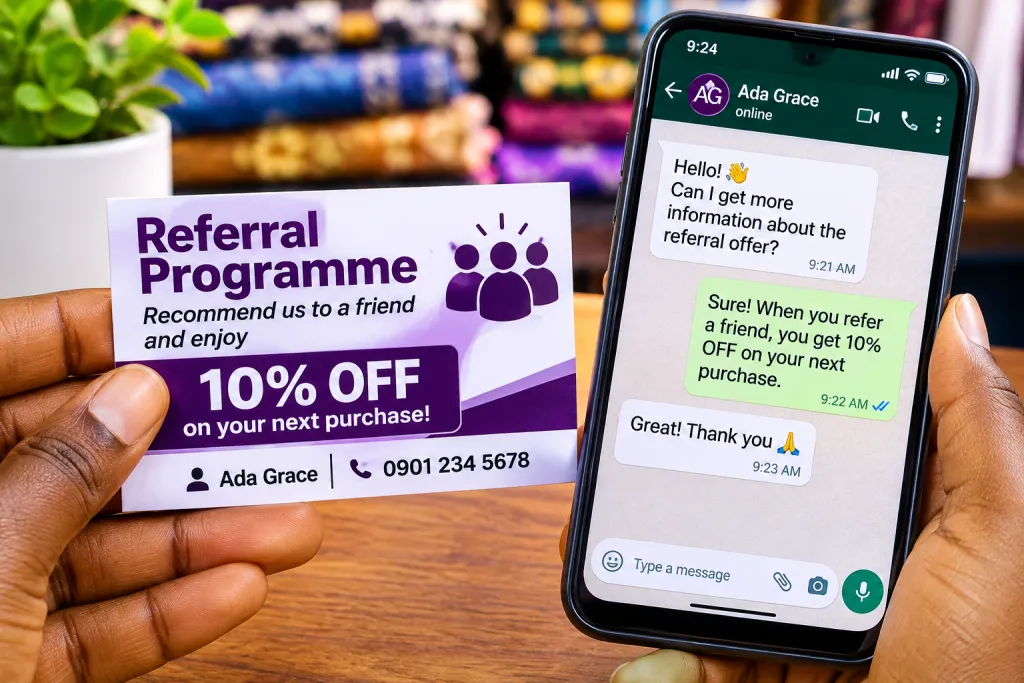
Why Referrals Beat Ads in Nigeria
When a friend says, "Use this person, they did my work well," you listen. An advert, however clever, is a stranger asking for your money. In a market where many buyers have been disappointed by sellers who over-promised, a recommendation from someone you know carries real weight.
Think of a Port Harcourt caterer who keeps getting bookings from the same office circle. Nobody ran a campaign; customers simply told other customers. A referral programme gives that habit a plan.
Referrals also tend to be cheaper. With ads, you pay for views and clicks whether or not anyone buys. In a referral programme small business owners can control, you usually reward people only after a new customer has actually paid. Referred customers also arrive with some trust already in place.
Nigerian customers already share recommendations on WhatsApp groups, Instagram DMs, church and mosque circles, estate groups and office chats. A referral programme does not create this habit. It gives it a structure, so the recommendations you are already getting become more frequent and easier to measure.
Referrals do not replace advertising entirely, and they only work if your service is good. A programme will not repair a poor product. It will multiply a good one.
Rewards People Actually Want (and What the Law Expects)
The best reward is something your customer values and you can afford. Common options include:
- A discount on their next order. Simple, and it brings the referrer back.
- A free or upgraded service. A free delivery, a free alteration or an extra hour of work costs you less than its apparent value.
- Airtime or data. Small, quick and popular, though it works best for low-priced products.
- Cash or a bank transfer. Appealing, but keep the amount modest and record it.
- A gift or branded item. Suitable for higher-value clients.
The right choice depends on what you sell. A restaurant might offer a free drink, a tailor a free alteration and a consultant a discount on the next invoice, because airtime would feel too small for a ₦300,000 project.
Consider rewarding both sides: the referrer gets a thank-you and the new customer gets a welcome discount. It also makes it easier for your customer to recommend you, because they are offering their friend a benefit instead of just a favour for themselves.
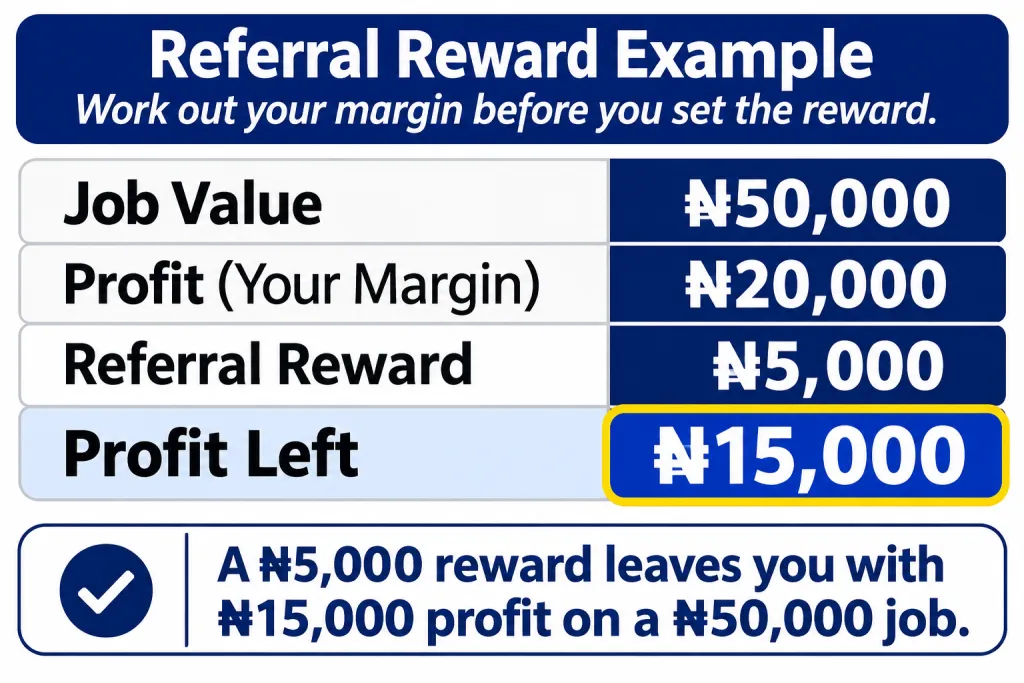
Match the reward to your profit, not only your sales. Suppose a new customer pays ₦50,000 and your profit on that job is ₦20,000. A ₦5,000 reward still leaves you ₦15,000 and a customer who may come back. Work out your margin first, then decide.
Write Your Referral Rules in Plain Language
Before you announce anything, write your rules in five or six lines you can paste into WhatsApp. They should answer:
- Who can refer, and who counts as a new customer?
- What does the referrer receive, and what does the new customer receive?
- When is the reward paid?
- Is there a limit or an end date?
Clear rules stop arguments before they start.
What the Law Expects
This section is general information, not legal advice. Rules change, so confirm anything important with a qualified lawyer or accountant.
- Be honest about the terms. State clearly what the reward is, when it is paid and any conditions. The Federal Competition and Consumer Protection Commission (FCCPC) is Nigeria's consumer protection regulator, and its official website carries its information for businesses and consumers.
- Respect personal data. If a customer gives you a friend's name and number, you are handling personal data, which the Nigeria Data Protection Act 2023 covers. The Nigeria Data Protection Commission is the regulator, so check its site for what it expects. As a sensible habit, ask the referrer to confirm their friend is happy to be contacted, and use the details only for that purpose.
- Keep it single-level. Reward people for introducing customers, not for recruiting other referrers who recruit more. Multi-level structures can look like a pyramid scheme.
- Keep records and ask about tax. Cash rewards may have tax implications for you or the recipient. Record every payment, then ask your accountant how to treat it, or check the Federal Inland Revenue Service website for official tax information.
Asking at the Right Moment
Most customers will never refer you unless you ask. The reason is rarely dislike. They simply do not think about it. Timing makes the difference.
The best moment is right after a good result: when the customer receives their order and is pleased, when you finish a job and they say "thank you", or when they leave a compliment. A customer who has just had a good experience is far more willing to share it than one you contact three months later.
Keep the request short and personal. For example:
"I'm glad you like it. If you know anyone who needs the same service, please send them to me. I'll give you 10% off your next order, and your friend gets the same."
Send it by WhatsApp or say it in person, whichever you already use with that customer. Avoid long forms or complicated rules, since anything that takes more than a minute to understand will be ignored.
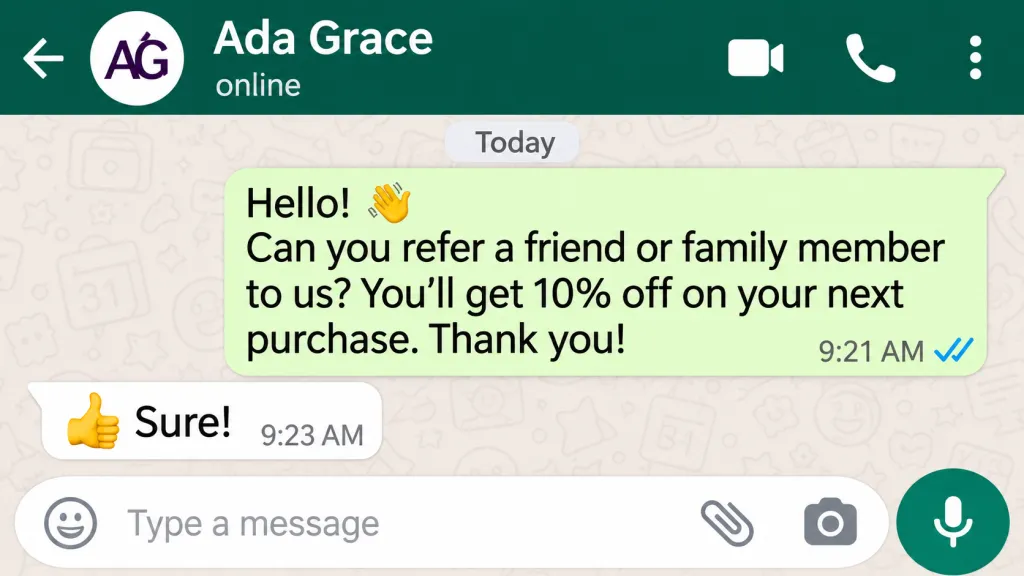
Make sharing easy. A hair stylist in Abuja can hand over a small card with her name, number and the offer, while a mechanic in Enugu can send a one-line WhatsApp message that the customer simply forwards.
Other good moments include after a positive review, after a repeat purchase and at the end of a project. Avoid asking in the middle of a complaint, or before the customer has actually received what they paid for.
Tracking Who Referred Whom Without Software
You do not need an app to track referrals. A notebook, a spreadsheet or a WhatsApp note-to-self will do the job.
A Referral Programme Small Business Owners Can Run on a Spreadsheet
Create a simple table with these columns:
| Referrer | New customer | Date | Purchase made? | Reward due | Reward paid |
|---|
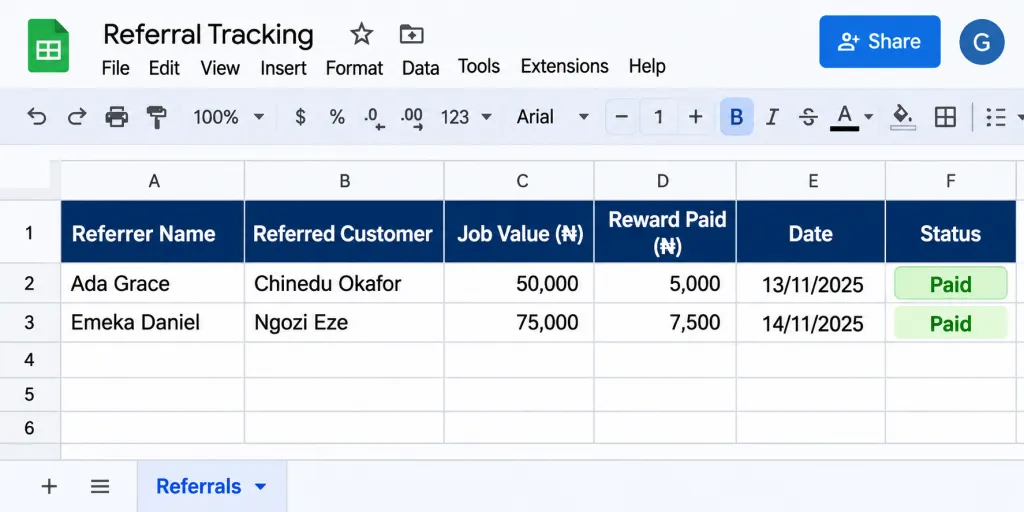
Then use one of two methods to link new customers to their referrers:
- Ask at the point of sale. Add one question to your order or enquiry process: "How did you hear about us?" If they name a person, record it.
- Give each referrer a code. A short code, such as the referrer's first name plus a number (TUNDE10), makes it easy to see who sent whom. Customers quote it when they buy.
Check the sheet once a week and pay rewards promptly. Delays kill programmes, because referrers who wait weeks stop recommending you. Add a column for notes too, so you can see which customers refer often and deserve extra attention.
Keep the sheet private. It holds names and phone numbers, so password-protect the file and share it only with staff who need it.
After a few months, compare what the rewards cost with the profit the new customers brought. If the programme pays for itself, keep going; if not, adjust the reward or the way you ask.
If referrals outgrow the sheet, that is a good problem to have, and you can consider software then.
Thanking Referrers Publicly
A private thank-you is polite. A public one also encourages others to take part.
With permission, you can post on your WhatsApp status, Instagram or Facebook page something like: "Thank you to Mrs Adebayo for sending three friends our way this month." Ask first, because some people prefer privacy, and never share personal details or purchases without consent.
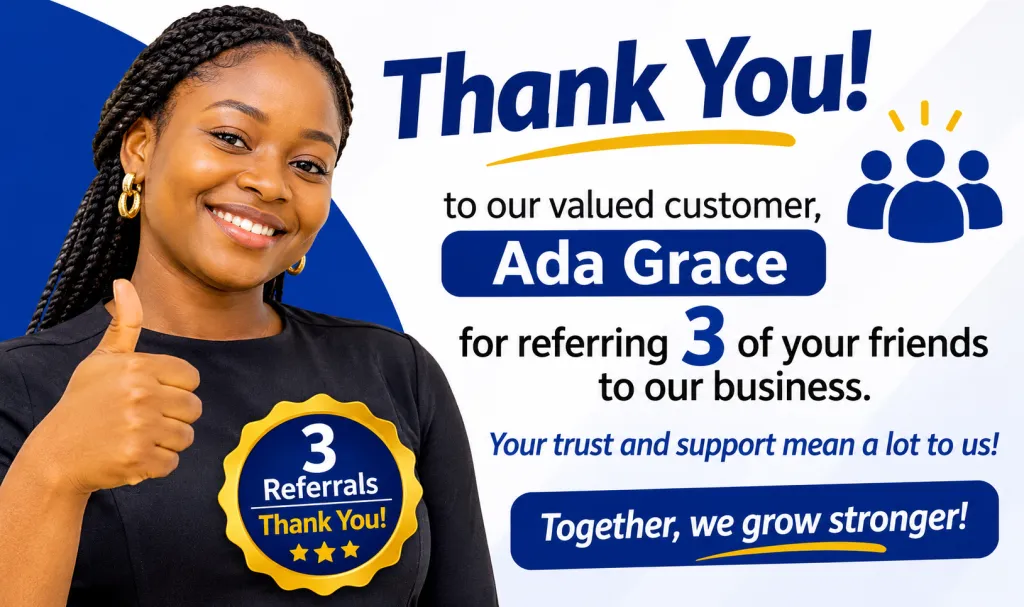
Other public ways to say thank you include:
- featuring a customer's story or testimonial on your website, with their agreement;
- running a monthly "top referrer" shout-out;
- sending a handwritten note or small gift alongside the reward.
Customer stories also make strong content. A short case study explaining why a customer recommended you answers the questions new visitors have and can help your website appear for relevant searches. If you would rather have help planning and writing that kind of material, Kosher Leads offers content marketing services for businesses that want to turn happy customers into published stories.
Whatever you do, keep thanking people consistently. A programme that feels appreciated keeps running, and one that feels ignored quietly stops.
Frequently asked questions
What is a good reward for a referral?
One that your customer values and your margin can support, usually a discount, free service, airtime or small cash payment. Start modest and adjust once you see what works.
Should I reward the new customer as well?
It often helps. A welcome offer gives the referred person a reason to try you and makes the referrer feel they are doing a friend a favour.
When should I pay the reward?
After the new customer has paid, and as soon as you reasonably can. State this timing in your terms so nobody is confused.
Do I need software to run a referral programme?
No. A spreadsheet or notebook is enough for most small businesses. Consider software only when manual tracking becomes difficult.
How do I stop people abusing the programme?
Set simple rules: one reward per new customer, no self-referrals and payment only after a completed purchase. Keep a record so you can check any claim.
Is a referral programme legal in Nigeria?
Rewarding customers for recommendations is a common business practice, but consumer protection, personal data and tax rules still apply. Confirm your specific plan with a qualified lawyer or accountant.
Conclusion
A referral programme small business owners can run well is simple: offer a reward people want, write clear rules, ask right after a good experience, record every referral and thank people promptly. Start small this month with five happy customers and a notebook, then improve as you learn what works. If you would like support turning satisfied customers into content that brings in more of them, Kosher Leads can help with your content marketing.