

This guide is designed specifically for small business owners who are spending their hard-earned money on advertising, social media, or local promotion but have no clear idea of what is actually driving revenue. By the end of this article, you will have a clear, budget-friendly strategy to identify which marketing channels bring in paying customers and which ones are simply wasting your cash. Learning how to track marketing results small business style does not mean hiring an expensive agency or learning complicated analytics software right out of the gate. With a few smart habits, free software, and a clean game plan, you can turn your marketing from a guessing game into a predictable growth machine.
Why Every Small Business Owner Needs to Know How to Track Marketing Results Small Business Style
When you run a small business, every single dollar matters. You cannot afford to treat promotion like a trip to the casino—putting money on red, spinning the wheel, and hoping for a win.
Yet so many owners do exactly that. They boost a Facebook post, print a stack of flyers, or sponsor a local event, and then wait to see if the phone rings. If sales jump that week, they celebrate and assume the ad worked. If things stay quiet, they figure the campaign flopped.
The trouble is, you are totally in the dark with that approach. Understanding how to track marketing results small business owners face requires moving past vanity metrics. Did that new client call because of your Instagram post, a Google search, or a glowing recommendation from a neighbor? Without clear tracking, you end up wasting money on dead-end ideas while completely ignoring the cheap, easy channels that are actually driving your revenue.
Agency Insider Warning: The biggest tracking mistake we see isn't failing to track—it's tracking "vanity conversions." For example, counting every person who clicks your contact page as a lead. In reality, only a fraction actually fill out the form. Always track bottom-of-funnel revenue actions, not just intent.
When you start measuring what happens, everything changes. You get total control back over your growth. You stop burning cash on vanity metrics like "likes" or page views and start putting every dollar directly toward making sales.
The Four Numbers Every Small Business Should Know
You do not need to look at messy spreadsheets filled with hundreds of confusing figures. In fact, tracking too much stuff usually just leaves you paralyzed. Stick to these four core numbers to get an instant, honest check on your business health:
1. Total Leads Generated
A lead is anyone who steps forward and shows real interest in what you sell. It could be someone filling out a quick quote form on your website, sending you a DM on Instagram, picking up the phone, or walking straight through your front door. Keep a simple weekly and monthly running tally of how many new leads come in.
2. Conversion Rate (Leads to Customers)
Getting 100 people to ask about your service feels great, but if only one of them actually buys, something is broken in your sales flow. Your conversion rate tells you what percentage of those curious leads turn into paying clients.
- The Formula:
(Total New Customers ÷ Total Leads) × 100
For instance, if 40 people reach out to you this month and 10 of them hire you, your conversion rate is 25%.
3. Customer Acquisition Cost (CAC)
Your Customer Acquisition Cost is the exact price tag attached to winning one new customer. Mastering how to track marketing results small business operators rely on comes down to this figure above all others, as it keeps your doors open long-term.
- The Formula:
Total Marketing Spend ÷ Total New Customers Acquired
If you spent $500 on local online ads last month and picked up 5 new buyers directly from that campaign, your CAC for that channel is $100 per customer.
4. Customer Lifetime Value (LTV)
How much money does a single customer spend with you over the entire time they stick around? If someone buys a $50 product once and never comes back, their LTV is $50. But if they sign up for a $50 monthly service and stay with you for two full years, their LTV leaps to $1,200.
Free Tools to Track Your Marketing Results
You do not need to spend thousands on high-end analytics software to get deep, reliable answers. Knowing how to track marketing results small business owners can manage for free starts with these platforms:
Google Analytics 4 (GA4)
Google Analytics is the industry standard for tracking how visitors find and interact with your website. It answers crucial questions like:
- How many unique people visited your site this month?
- Where did they come from (Google search, social media apps, direct links)?
- Which blog posts or product pages kept them reading the longest?
- Did they complete key actions, like submitting an inquiry form?
Agency Insider Reality Check: GA4 is notoriously confusing out of the box. Most small business owners open it, get overwhelmed by missing reports or vague menus, and give up. Don't fall into that trap. Ignore 90% of the dashboard and bookmark just two views: Reports > Acquisition > Traffic Acquisition (to see where traffic comes from) and Reports > Engagement > Conversions (to see who actually converted).
Google Search Console
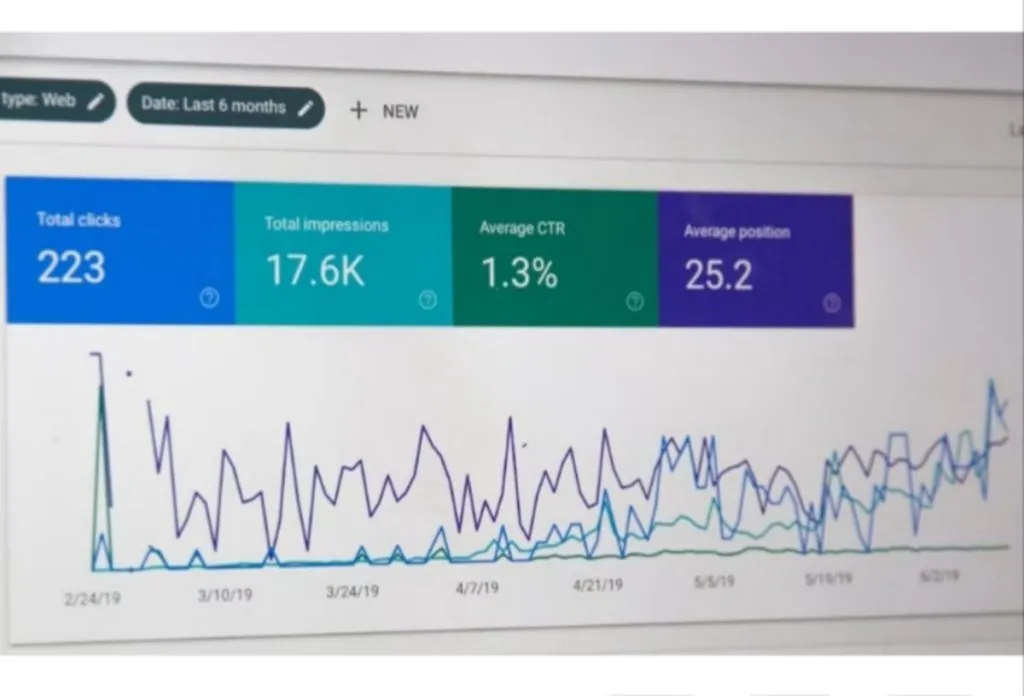
While Google Analytics shows you what people do after they arrive on your site, Search Console shows you what they were doing before they clicked. It lays out the exact search terms people typed into Google when your site popped up, where you rank for those keywords, and how many people click through to read your content. And now, Google Console allows you to track the performance of your various social accounts like Instagram, TikTok, and YouTube in Google Search Results.

Your Own Internal Counts
Never ignore the rich data sitting right inside your everyday operations. Your booking calendar, point-of-sale system, or sales inbox hold golden data. Make a habit of regularly logging contact forms, call logs, and walk-ins.
Asking Every Customer Where They Heard of You
As impressive as digital tools are, they still cannot track real-world word-of-mouth, physical signs, or offline networking. The simplest tactic for how to track marketing results small business guides recommend is just talking directly to your audience.
Train yourself and your staff to ask every single new buyer one friendly, non-negotiable question: "By the way, how did you first hear about us?"
How to Make This a Habit:
- Put a Dropdown on Your Website Forms: Add a required "How did you find us?" field with options like Google Search, Instagram, Recommended by a Friend, Local Flyer, or Event.
- Prep Your Team: If customers call in or walk through your doors, make sure your team asks naturally during the conversation and jots it down in your sales system.
- Keep an Easy Log: Set up a shared Google Sheet where every new client entry includes their name, purchase amount, and primary traffic source.
Working Out What a Customer Costs You to Win
Knowing your Customer Acquisition Cost (CAC) takes the guesswork out of where to spend your budget next month. Understanding how to track marketing results small business metrics allows you to allocate every dollar with confidence.
Let's look at a quick real-world example:
Imagine you ran two different promotions last month:
- Campaign A (Google Search Ads): You spent $300 and pulled in 6 new customers.
- CAC = $300 ÷ 6 = $50 per customer.
- Campaign B (Local Paper Ad): You spent $400 and brought in 2 new customers.
- CAC = $400 ÷ 2 = $200 per customer.
Both efforts brought in business, so on the surface, they both look like wins. But once you break down the actual cost to win each client, the winner is glaringly obvious. The Google Ads delivered clients at a quarter of the price. Moving forward, you can confidently cut the print ad and roll that $400 straight into Google Search to double your outcome.
Practitioner Benchmarks (LTV to CAC Ratio):
- The 3:1 Rule: For a healthy business, your Customer Lifetime Value (LTV) should be at least 3 times your Customer Acquisition Cost. If it costs you $100 to win a client, they should generate at least $300 in total value over their time with you.
- Red Flag (1:1 or lower): If your CAC is equal to or higher than what a customer spends, you are essentially buying revenue at zero profit or at a loss.
- Growth Sweet Spot (4:1 to 5:1): This gives you comfortable margins to re-invest heavily into scaling your ads.
If you ever want an experienced analytics team to set up pixel-perfect conversion tracking, eliminate vanity data, or build automated dashboards tailored to your revenue goals, explore our specialized Data & Analytics services to turn your raw figures into predictable growth plans.
A One-Page Monthly Report You Will Actually Read
The main reason most business owners give up on tracking is that they try to build massive, complicated spreadsheets that take hours to maintain. Setting up a simple dashboard makes how to track marketing results small business routines easy to keep up with month after month.
Here is a simple template for what your monthly report should include:
| Category | What to Record | Why You Need It |
|---|---|---|
| Website Growth | Monthly Unique Visitors | Tells you if your overall online presence is growing. |
| Lead Flow | Total Inquiries / Calls | Shows how much interest your campaigns are pulling in. |
| Sales | Total New Paying Clients | Measures how well you close deals. |
| Ad Budget | Total Dollars Spent | Keeps your promotional costs from sneaking up on you. |
| Cost Efficiency | Average CAC | Shows whether winning customers is getting cheaper or pricier. |
| Top Channel | Best Single Lead Source | Highlights where to re-invest your money next month. |
Set a repeating reminder on your calendar for the first Monday of every month. Open your tools, log those numbers, and look over the sheet. You will instantly see what is working and what needs tweaking before you spend another dollar.
Frequently Asked Questions
How long should I wait before deciding if a campaign worked?
For digital ad campaigns on platforms like Google or Meta, give them at least 30 to 60 days so the algorithms can optimize and collect enough data. Organic strategies like SEO, blogging, or building a brand presence usually take 3 to 6 months to display consistent, reliable trends.
What if most people say they found me through "word of mouth"?
Word-of-mouth recommendations are amazing, but do not stop there! Gently probe a bit deeper by asking: "That's awesome! Who was it that recommended us?" or "Did you happen to look us up online or check our reviews before reaching out?" You will often find that even if a friend dropped your name, your website or Google listing was what gave them the confidence to hire you.
Do I need to hire an expert if I am learning how to track marketing results small business strategies on my own?
Not to start out! Master how to track marketing results small business style on your own using free platforms like GA4, quick customer feedback, and a basic spreadsheet. However, as your budget grows and you start running multiple paid channels at once, bringing in analytics professionals can save you massive headaches and keep your tracking pixel-perfect.
Take Control of Your Marketing Starting Today
You do not need a deep pocketbook or a math degree to measure your marketing. Now that you know how to track marketing results small business success depends on taking action—monitor your four core numbers, use free tools like Google Analytics, ask your customers how they found you, and review a simple monthly report.
Stop throwing money at guesswork. Start tracking your results, cut out what isn't working, and invest your energy confidently into the strategies that bring in real profit.