


For Nigerian businesses, complaints often show up publicly on X, Instagram, TikTok, or WhatsApp statuses before they ever get to you. A complaint comes from a customer, one that isn't just seen by you, but by potential customers too. Don't panic. Here is how to handle customer complaints online.

Customer complaint: “My order came three days late and nobody told me anything. Not happy at all.”
Brand reply (public): “We’re sorry to hear about your experience. We understand how frustrating this must be. Please kindly be patient with us as we work towards resolving this.”
The makeup of a brand isn't always determined by the great reviews, but by how complaints are handled when they come. You can't control the reviews, but you can control the narrative the public gets. The ball is in your court. How best can you take the shot?
It is not just about calming the customer, but about building trust with potential customers. A complaint gives a brand an opportunity to show what it truly represents when things don't go as planned.
Why Your Reply to an Online Complaint Matters More Than the Complaint
Mistakes happen in businesses. Unexpected ones. It could be damage caused by a dispatch rider, unbearable traffic, a delayed delivery, or even an error made by the customer.
Here's the thing: the customer doesn't always care whose fault it is. At this point, a defensive response isn't the right move. There is a need to understand the customer's concern and not respond to the tone of the complaint.
It doesn't mean agreeing with everything the customer says, but it speaks value. Customers want to feel valued. They want to know that they matter and that without them, the business isn't complete.
Your reply could either fail your brand or draw more potential customers to it. Someone reading the complaint may not even be interested in the original problem. They may simply be looking at how the business responds. A calm and helpful response can tell a potential customer, “This is a business I can trust when things go wrong.” and that's why the way you handle customer complaints online factors into your brand's growth.
What to Say First to an Unhappy Customer (and What Never to Say)
Your first response matters. A Nigerian customer may not want to know whether the situation was beyond your control. What they want to know is whether their concern is being heard.
“We're sorry to hear about your experience. We understand how frustrating this must be. Please kindly be patient with us as we work towards resolving this.”
It shows a brand that is wearing the shoes of a troubled customer. It shows empathy before explanations.
Your first reply must be welcoming and not repulsive. It must leave the door open for more conversation and not shut it.
Avoid responses that sound defensive, sarcastic or dismissive. Statements like “It wasn't our fault,” “You should have known better,” or “There is nothing we can do” can make the situation worse.
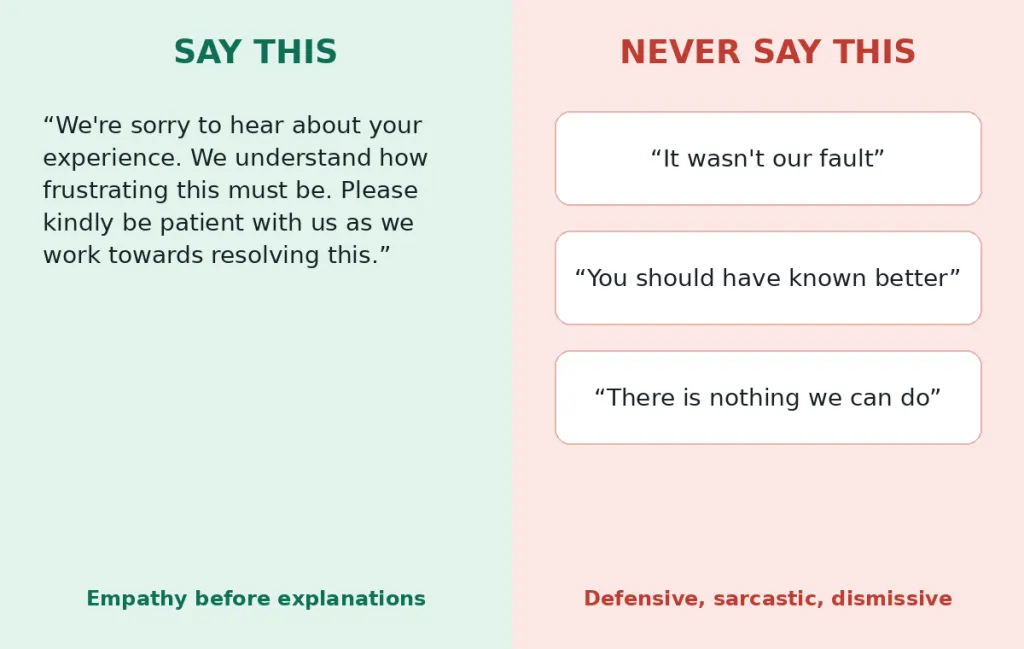
Say this: the empathetic reply shown above. Empathy comes before explanations.
Never say:
- “It wasn’t our fault.”
- “You should have known better.”
- “There is nothing we can do.”
Replies like these sound defensive, sarcastic or dismissive, and they can make the situation worse.
How to Move an Online Complaint to a Private Chat
Before moving to a private chat, you must first acknowledge the issue and properly handle customer complaints online and publicly. This is what the public sees, and they want to see a brand they can trust; a brand that doesn't just close after an order is completed.
Moving the conversation privately isn't an escape route. It shows that beyond the public response, the customer's care is still a priority.
Not all complaints need public attention. Some need to be discussed privately. This gives the customer the comfort to open up about the issue.
For example, after acknowledging the complaint publicly, you can invite the customer to send a direct message with their order details. This allows sensitive information to remain private while the business works towards a solution.

Using the same late-delivery complaint, the brand acknowledges it publicly and then invites the customer to continue in a direct message:
Brand reply (public): “We’re sorry to hear about your experience. Please send us a direct message with your order details so we can fix this quickly.”
When to Apologise Publicly to a Customer
A public apology builds brand character. It presents a brand that sees its mistake, acknowledges it, and is ready to do better.
When making a public apology, never make the customer a contributory factor to the complaint. No entitlement and no excuses. When the mistake is clearly yours, there is a need to take ownership.
That public apology doesn't speak weakness; it speaks accountability. It gives the customer the feeling that their voice has been heard.
It also shows potential customers a brand that is willing to take responsibility. People don't expect businesses to be perfect all the time. They want to know that when something goes wrong, the business will not run away from responsibility.
Turning a Fixed Complaint into a Loyal Customer
It doesn't just end at resolving a complaint. What goes on while a complaint is being responded to matters too.
In responding to a complaint, communicate properly and give a clear timeframe. If more time is needed, communicate that too. Don't leave the customer wondering what is happening.
After the issue has been rectified, check back to know how satisfied the customer is. Finally, give them the assurance that whenever they need help again, your business is open to assisting them.
This wasn't just a complaint. You may have just gained a loyal customer — one who felt heard and safe, and is ready to try again regardless of a previous encounter.
Sometimes, another apology is not what is needed. Where a complaint becomes constant, there is a need to check back and fix the problem permanently. If several customers complain about the same issue, look beyond the individual complaint and examine the process causing it, and that is one of the ways to handle customer complaints online in Nigeria.
A complaint can therefore become more than a problem. It can become feedback that helps a business improve.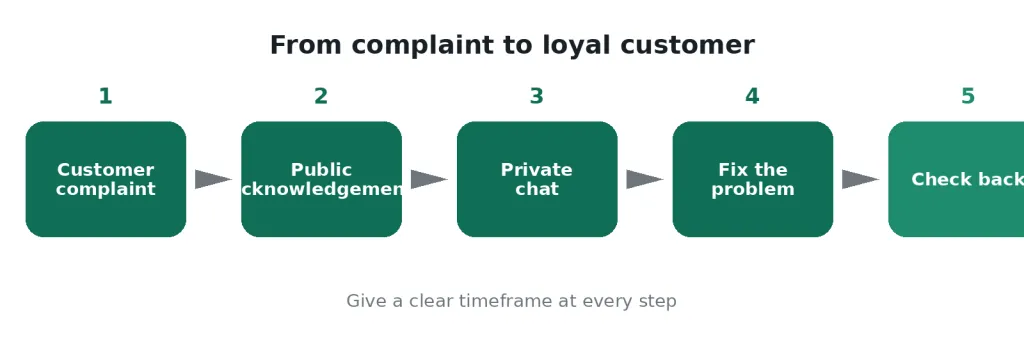
Final Thoughts on Handling Customer Complaints Online
Finally, the reviews will always come in. As a business owner, be ready to listen, learn and understand the customer. Be ready to control the narrative.
You can't always control the complaint or the customer's response, but you can control what people see when a complaint comes.
Handle the complaint. Hear the customer. Fix the problem. Build trust.
That is how a complaint can become an opportunity to build a brand that breeds family.
Frequently Asked Questions on Handling Customer Complaints Online
How do you handle customer complaints online?
To handle customer complaints online, reply calmly and never get defensive. Say sorry and show that you understand the frustration first. Then invite the customer to send their order details in a direct message, give a clear timeframe for the fix, and check back afterwards to confirm they are satisfied.
Should you handle customer complaints online in public or in private?
Reply in public first, then move the conversation to a private chat. The public reply shows other customers that you care, while a direct message lets the customer share order details safely. Not every complaint needs public attention, and some are better discussed privately.
What should a brand say first to an unhappy customer?
Say sorry and show that you understand how frustrating the situation is. Empathy comes before explanations. Keep the reply welcoming so the conversation stays open. Avoid defensive, sarcastic or dismissive lines such as “It wasn't our fault,” “You should have known better,” or “There is nothing we can do.”
When is a public apology the right move?
A public apology is right when the mistake is clearly yours. Take ownership, make no excuses and never blame the customer. It shows accountability, not weakness, and it tells potential customers that your business will not run away from responsibility when something goes wrong.
What if several customers complain about the same thing?
Look beyond the individual complaints and examine the process causing them, then fix it permanently. Another apology is not what those customers need. Repeated complaints are feedback that can help the business improve, so treat them as a signal to change something rather than a queue of separate problems. Learning how to handle customer complaints online is vital for the success of any business.