

If you have ever searched for keywords for Nigerian Business, you have probably met a lot of jargon. This guide is for business owners and junior marketers who have never done it. You will learn to find the phrases customers type into Google, tell buyers from browsers, and turn a list into a plan of pages, using only free tools.
Starting from what customers say, not what you call it
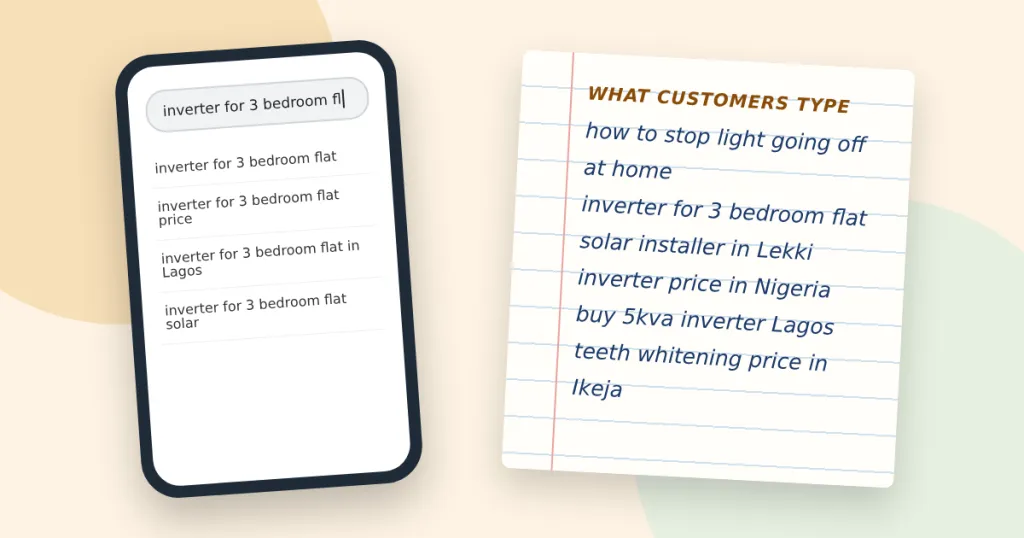
Most owners search for the name they use inside the business. Customers rarely use it. A company that sells "solar inverter systems" may find that buyers type "how to stop light going off at home" or "inverter for 3 bedroom flat". Keyword research is the job of finding those real phrases.
Start with a blank sheet, not a tool. Collect customer language from five places:
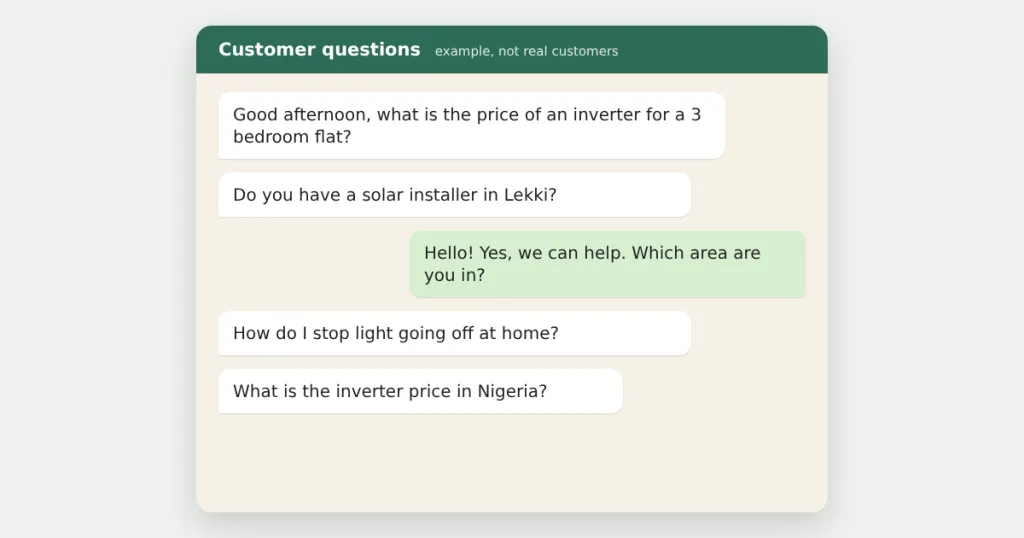
- Messages: the questions customers send on WhatsApp, Instagram and email.
- Sales calls: what people say in the first two minutes, before you explain anything.
- Reviews and complaints: yours and your competitors'.
- Local words: area names (Lekki, Ikeja, Wuse, GRA), price talk ("how much", "price in Nigeria") and the nicknames people use for your product.
- Your staff: ask whoever answers customers every day for the ten questions they hear most.
Aim for 20 to 30 plain phrases. Do not worry about search numbers yet. You are collecting the customer's vocabulary, and the tools in the next section will show which of those phrases people really search.
Free Tools for Keywords For Nigerian business Research
Four free tools cover most of what a small business needs. Use them in this order.
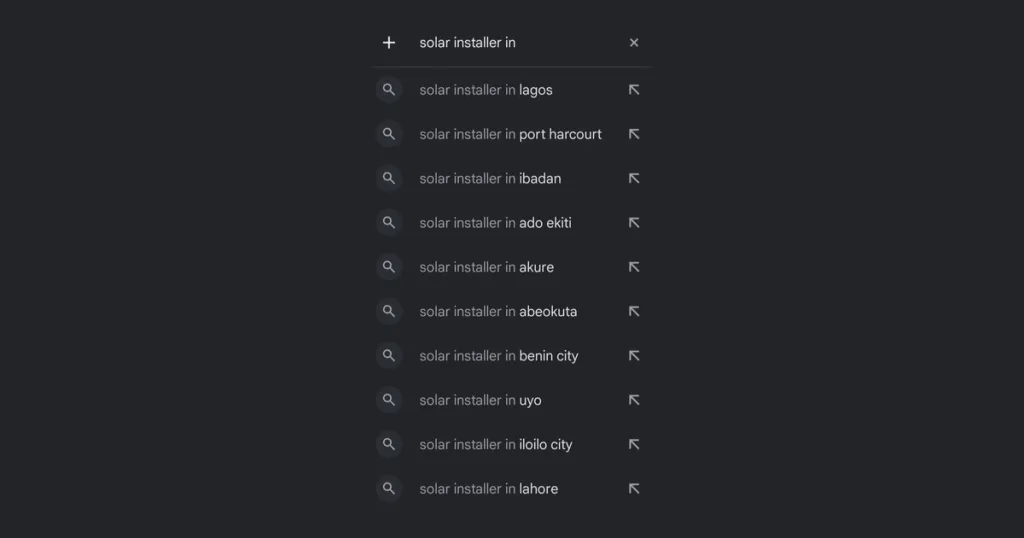
- Google autocomplete. Open Google, type the first words of one of your phrases and read the suggestions. Then add a letter after it ("solar installer in a", then "b", then "c") to see more. These suggestions come from real searches, in real wording. Do this on your phone, because that is where most of your customers search.
- People Also Ask. After you search a phrase, look for the "People also ask" box in the results. Each question is a ready-made article title or FAQ. Click one open and more questions appear underneath.
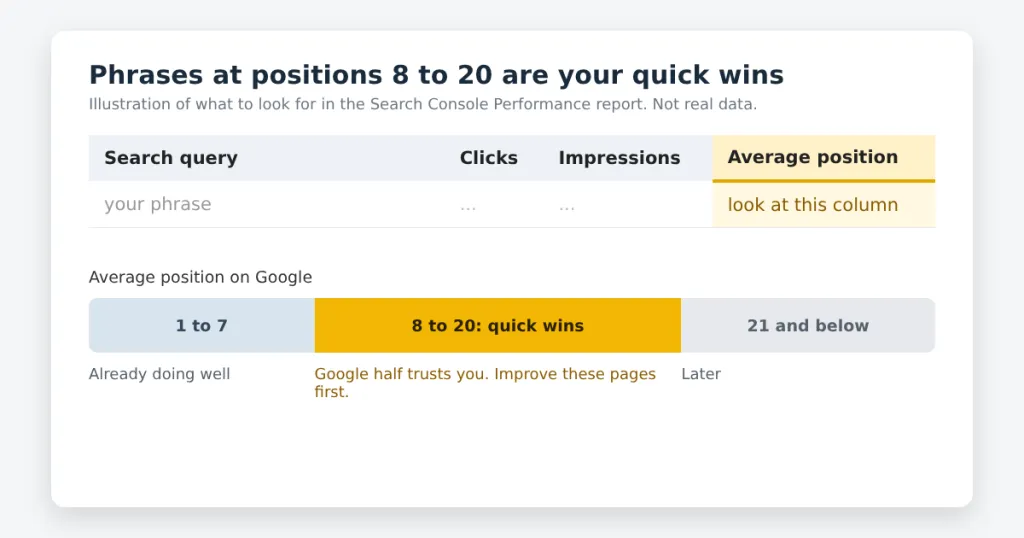
- Google Search Console. This free tool shows what Google already knows about your site. Once your website is verified, open the Performance report to see which searches brought people to you, how often you appeared and your average position. Filter by country to see Nigeria only. Phrases sitting around positions 8 to 20 are your quick wins, because Google already half trusts you for them. A new site will show little data, so come back in a few weeks.
- Google Keyword Planner. It sits inside Google Ads and is free with an account. You do not need to run ads to use it. Enter a phrase, set the location to Nigeria and it suggests related ideas with estimated monthly searches. Without active ad spend, the numbers come as broad ranges, such as 100 to 1K. That is still enough to tell a phrase thousands search from one only a handful do.
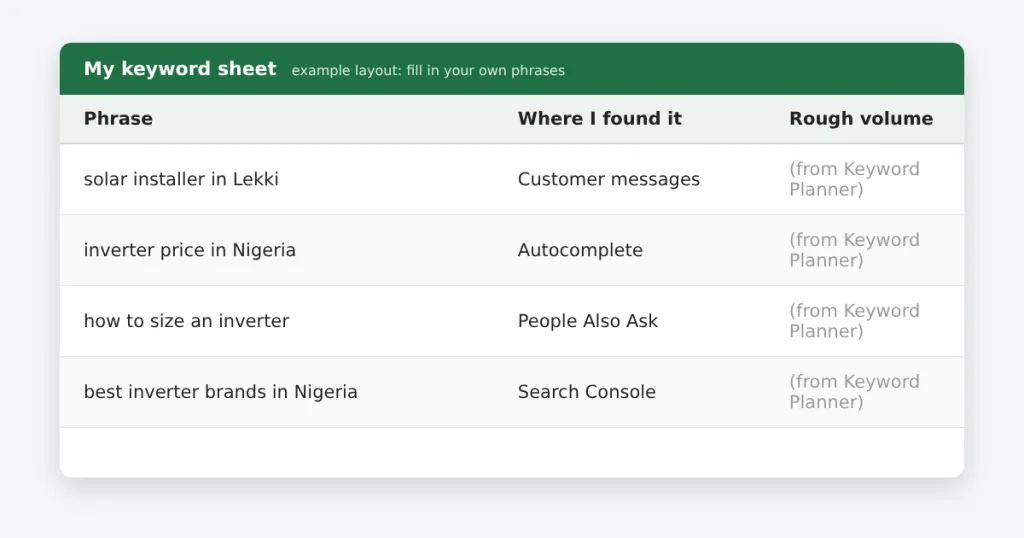
Copy everything into one spreadsheet with three columns: the phrase, where you found it and the rough volume. Do not delete anything yet.
Reading intent: who is buying and who is browsing
Two people can search almost the same words and want different things. Intent is the reason behind a search. Reading it stops you from writing pages that nobody acts on.
Sort every phrase in your sheet into one of three groups:
- Learning ("what is a solar inverter", "how does SEO work"). The person is browsing and wants an explanation. A blog post or guide fits.
- Comparing ("best inverter brands in Nigeria", "solar vs generator cost"). They are weighing options. A comparison page or buying guide fits.
- Buying ("solar installer in Lekki", "inverter price in Nigeria", "buy 5kva inverter Lagos"). They have money and a deadline. A service or product page with prices, location and a way to contact you fits.
The words give it away. "Price", "cost", "near me", "buy", "hire", "quotation" and area names signal buying. "What is", "how to" and "meaning" signal learning.
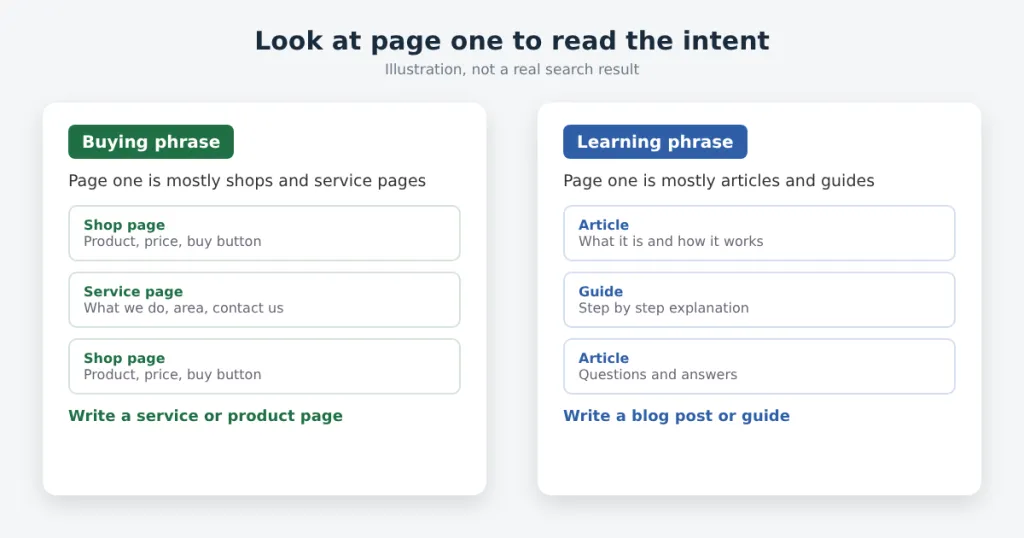
Here is a practical check. Search the phrase yourself and look at page one. If Google shows mostly shops and service pages, it is a buying phrase, and a blog post will struggle. If it shows articles and guides, it is a learning phrase. Match your page to what Google already rewards.
Buying phrases are fewer and have smaller numbers, but they bring the enquiries. Start there.
Judging whether you can rank for a phrase
Not every good phrase is a fair fight. A quick look at page one tells you whether you have a chance, and you need no paid tool for it.
Search the phrase and check four things:
- Who is on page one? Big national brands, large marketplaces and major news sites are hard to beat. Small business sites, blogs and directories mean the door is open.
- How well do the results match? If the top pages only half answer the question, a focused page from you can win.
- How old are they? Pages with dated advice are easier to replace.
- Is the phrase local? Phrases with a city or area name usually have weaker competition.
Then mark each phrase easy, medium or hard in your sheet. Longer phrases are usually easier. "Dentist" is hard. "Teeth whitening price in Ikeja" is not.
A new website will rarely win hard phrases early on, so build on the easy and medium ones first and let results add up. Prefer to have a team do this for you? Our SEO service is the place to start.
Turning a list of phrases into a plan of pages
A list of phrases is not a plan. The plan says which page targets which phrase. Follow three rules:
- One main phrase per page. If two phrases want the same answer ("solar installer Lagos" and "solar installation company Lagos"), they share a page. If they need different answers, they get separate pages.
- Match the page to the intent. Buying phrases go on service or product pages, comparing phrases on guides, learning phrases on blog posts.
- Link the pages together. Each blog post points to the service page it supports, and the service page points back to the posts that answer buyers' questions.
Keep the plan in a simple table. Here is an example for a solar installer in Abuja:
| Phrase | Intent | Difficulty | Page to create |
|---|---|---|---|
| solar installer in Abuja | Buying | Medium | Service page: solar installation in Abuja |
| inverter price in Nigeria | Buying | Hard | Later: price guide by system size |
| how to size an inverter | Learning | Easy | Blog post: sizing an inverter for your home |
| best inverter brands in Nigeria | Comparing | Hard | Later: buying guide |
Pick five pages to publish first: the easiest buying phrases, then the questions that support them. Finish those before starting the next batch. Five good pages beat fifty thin ones.
The mistake of chasing big words
The most common beginner mistake is going for the biggest phrase in the niche: "digital marketing", "real estate", "fashion". It feels right because the search number is large. It rarely works, for three reasons.
First, the competition is the strongest sites in the country, so a new page will sit far down. Second, the intent is vague. Someone searching "real estate" might want to buy, rent, study or invest, so few of them are your customer. Third, you wait months for traffic that may never convert.
Smaller, specific phrases ("2 bedroom flat for rent in Yaba", "affordable fashion designer in Surulere") bring fewer visitors who are much closer to buying. A hundred searches a month from people ready to call you beat ten thousand from people who are only curious. Add up several specific phrases and you can reach the same traffic with a far better audience.
Frequently asked questions
Do I need paid tools for keyword research in Nigeria?
No. Google autocomplete, People Also Ask, Search Console and Keyword Planner are enough for a first pass. Paid tools add convenience and bigger databases, but you can start without them.
How many keywords should I target?
Start with 10 to 20 phrases mapped to about five pages. Add more once those pages are live and Search Console shows what is working.
How long before keyword research shows results?
Expect weeks to a few months, depending on competition and how new your site is. Easy, local phrases tend to move first.
Should I use Pidgin or local slang in my keywords?
Only if your customers search that way. Try the phrase in Google autocomplete on your phone. If the suggestions use the slang, use it. If not, stay with plain English.
Is the volume in Keyword Planner accurate for Nigeria?
Treat it as a guide, not an exact count. Without ad spend it shows ranges, so use it to compare phrases rather than to forecast traffic.
Can someone do this for me?
Yes. If you would rather hand it off, see our digital marketing services and ask about SEO.