


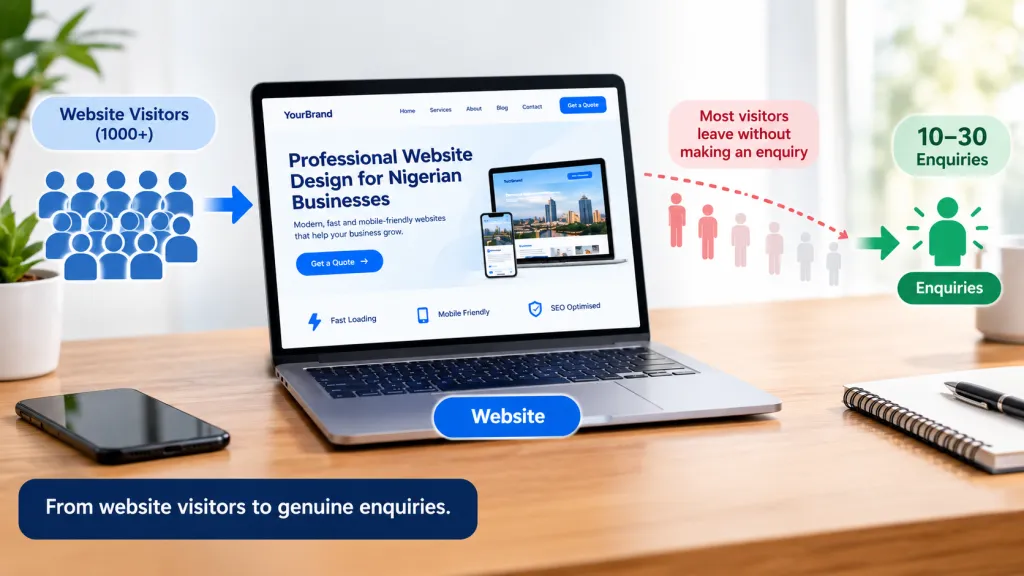
If you're dealing with website traffic but no leads, read this because we'll discuss why visitors leave without making an inquiry, how to find where they're dropping off, and what you can change to turn more of your traffic into real business opportunities.
You know, getting people to your website is only half the job; you can spend money on Google Ads, social media, SEO or other traffic sources and still wonder why nobody is calling, filling out your form or sending a WhatsApp message.
The problem may not be the amount of traffic you're getting, your website may simply not be doing enough to turn that attention into action.
Here are five common reasons:
1. Your Offer Isn't Clear Enough
When someone lands on your website, they should quickly understand three things:
- What you sell
- Who it is for
- Why should they choose you?
If your homepage says something vague like "We provide quality solutions for modern businesses," visitors have to work too hard to understand what you actually offer.
Most won't.
Your main headline should communicate your offer clearly. For example:
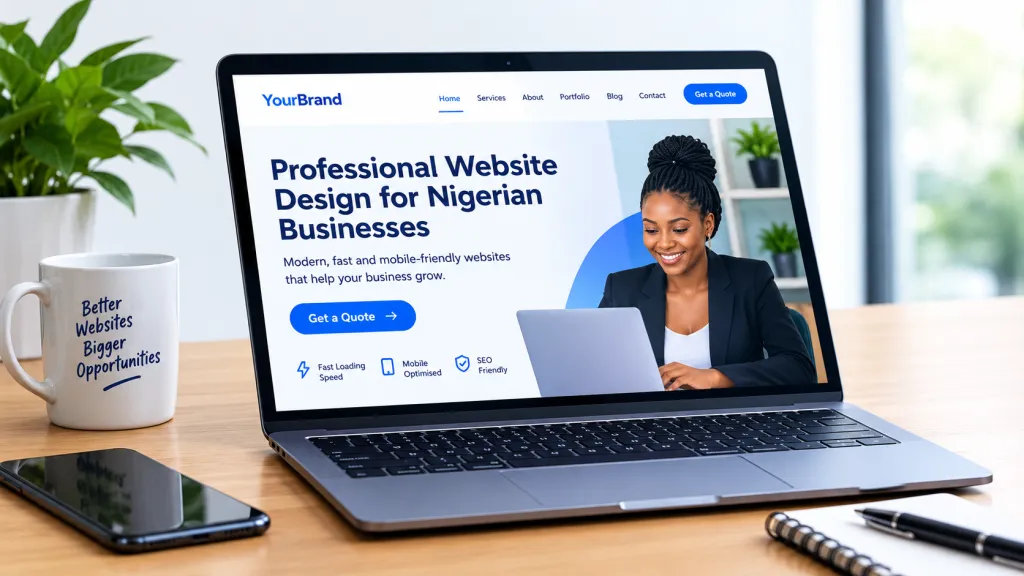
"Professional Website Design for Nigerian Businesses"
is much easier to understand than:
"Building Digital Experiences for Tomorrow."
You can still make your brand sound creative and distinctive, but clarity should come first.
Your offer should also lead naturally to an action. If you provide website design, for example, your page could direct visitors towards "Request a Quote," "Book a Consultation," or "Start Your Project."
The visitor shouldn't have to figure out what to do next.
2. Your Website Is Too Slow
People are impatient online.
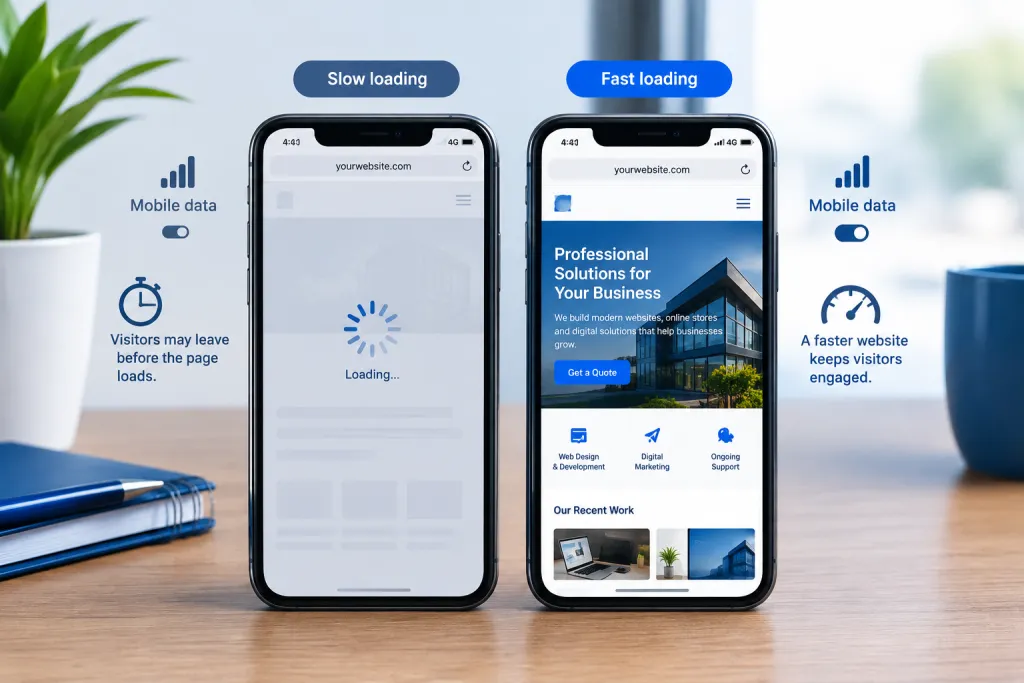
If your website takes too long to load, some visitors will leave before they even see what you offer. This can be particularly important when much of your traffic comes from mobile devices.
A slow website can be caused by things such as:
- Large, uncompressed images
- Too many plugins or scripts
- Poor hosting
- Unnecessary animations
- Heavy website themes
- Poorly optimized code
Don't just test your website on your computer, open it on a phone using mobile data, visit different pages, click the buttons, try submitting the contact form.
If you're waiting around for pages to load, imagine how a potential customer feels.
Speed matters because visitors who arrive from search engines, social media or adverts can easily go somewhere else.
3. You Don't Have Enough Proof
A visitor can be interested in your service and still hesitate to contact you.
The reason is simple: they don't know whether they can trust you yet.
This is where proof becomes important.
Your website can include:
- Customer testimonials
- Reviews
- Case studies
- Client logos
- Portfolio projects
- Before-and-after examples
- Results from previous work
- Relevant certifications or professional memberships
Don't simply tell people that you're good, show them.
For example, instead of saying:
"We create websites that help businesses grow."
you could show a real project, explain the client's problem, describe what you changed and share measurable results where appropriate.
Real examples give visitors something concrete to consider.
This becomes even more important when your service is expensive or requires a significant commitment from the customer.
4. Contacting You Is Too Difficult
This is one of the easiest problems to overlook.
Someone can be genuinely interested in your business and still leave because contacting you feels like too much work.
Maybe your phone number is hidden at the bottom of the page, there's no WhatsApp button, your contact form asks for too much information, the form doesn't work properly on mobile, or perhaps visitors have to create an account before they can contact you.
Don't make potential customers work unnecessarily, give them simple options such as:
- Call Us
- Send an Enquiry
Make those options easy to find and easy to use.
5. You're Attracting the Wrong Traffic
Not every website visitor is a potential customer.
This is another major reason for website traffic but no leads.
Imagine you sell premium office furniture, but your advertising attracts people searching for cheap second-hand furniture.
Your website could be beautifully designed and your traffic numbers could look impressive. But many of those visitors aren't looking for what you sell.
The same thing happens with search traffic.
Someone searching "What is a website?" is different from someone searching "Website designer for my business in Lagos."
The second search shows much stronger commercial intent and that's exactly why traffic shouldn't be judged by volume alone.
Look at the quality of the visitors you're attracting.
Ask yourself:
- What are they searching for?
- Which adverts brought them to the website?
- Which pages do they visit?
- Are they in the locations you serve?
- Do they fit your target customer?
- Are they actually looking for the service you provide?
More traffic isn't always the answer, sometimes you need more relevant traffic.
If people are visiting your website but not making enquiries, don't guess what the problem is.
Look at the data.
Website analytics can show you things such as:
- Which pages receive the most visits
- Where visitors come from
- Which pages they leave from
- How long they stay
- What devices they use
- Which pages lead to conversions
Heat maps and session recordings can also help you understand how visitors interact with important pages.
For example, imagine your service page receives 2,000 visitors but almost nobody reaches your enquiry form.
That's a useful clue.
Maybe the page is too long, perhaps the call-to-action is difficult to find, the offer might not be convincing enough, or the visitors may simply not be the right audience.
The important thing is to investigate instead of assuming.
Make the Next Step Obvious on Every Page
Visitors shouldn't have to work out what you want them to do.
Every important page should have a clear next step.
On a service page, that could be:
"Get a Quote"
On a product page:
"Order Now"
On a consultation page:
"Book a Consultation"
On an article:
"Speak to Our Team"
You don't necessarily need the same button everywhere, your call-to-action should match the visitor's stage and the purpose of the page.
Someone reading an educational article may not be ready to buy immediately. However, they might be ready to learn more about your service.
Your website should make that next step easy.
Give Visitors the Contact Method They Prefer because different customers prefer different ways of communicating.
Some people want to send a quick WhatsApp message, others would rather call, someone comparing several suppliers may prefer filling out a form so they can explain exactly what they need.
If you only provide one contact method, you may be losing enquiries unnecessarily.
If your customers commonly use WhatsApp, make it easy for them to start a conversation.
Instead of a vague button such as "Contact Us," try something more specific:
"Chat with us on WhatsApp."
The visitor immediately understands what will happen when they click.
- Phone
For customers who prefer speaking directly with someone, make your phone number visible.
A button such as "Call for a Consultation" tells the visitor exactly what the option is for.
- Contact Forms
Keep forms simple.
Ask for the information you genuinely need to begin the conversation. If you don't need someone's full address, company registration number and five other details before the first conversation, don't ask for them.
A shorter form can make the first step feel much easier.
Test One Change at a Time
When your website isn't generating enough enquiries, it can be tempting to change everything at once.
Don't.
If you change your headline, buttons, images, pricing, form and page layout at the same time, you won't know which change actually made a difference.
Start with one problem.
For example, test a clearer headline, then measure what happens.
Next, make your WhatsApp button more visible and measure again.
After that, you could reduce the number of fields in your contact form.
Testing one change at a time gives you a clearer picture of what's working, you don't necessarily need to redesign your entire website.
Sometimes a small change can make a meaningful difference.
Improve the Journey, Not Just the Traffic
When businesses see low enquiries, their first reaction is often to look for more traffic.
But if your website is already struggling to convert visitors, sending even more people to the same weak page may not solve the problem.
Start with the journey.
- Someone discovers your business.
- They visit your website.
- They understand your offer.
- They see evidence that you can deliver.
- They find the information they need.
- They see an obvious next step.
- They contact you.
That's the journey your website should make as simple as possible.
Frequently Asked Questions;
1. Why am I getting website traffic but no leads?
There are several possible reasons. Your offer may be unclear, your website may be slow, visitors may not trust the business yet, contacting you may be difficult, or the traffic you're attracting may not match your target customers.
2. How much website traffic do I need before I get leads?
There isn't one traffic number that guarantees enquiries.
Lead generation depends on several factors, including your industry, offer, traffic quality, website experience and conversion process.
A smaller number of highly relevant visitors can be more useful than thousands of people who aren't interested in your service.
3. How can I tell where visitors are leaving my website?
Website analytics can show you page views, traffic sources, engagement and exits. Heat maps and session recordings can provide additional insight into how visitors interact with important pages.
4. Should I use WhatsApp on my business website?
If your customers commonly use WhatsApp, it can be a useful contact option. Make the button easy to find and use clear wording so visitors know what happens when they click it.
5. Should I have both a contact form and a WhatsApp button?
You can offer both. Different visitors prefer different communication methods, so giving people a choice can make it easier for them to contact you.
6. How do I improve my website conversion rate?
Start by identifying where visitors are dropping off. Then review your offer, page speed, trust signals, calls-to-action, contact options and traffic quality.
Make one change at a time and measure the result before moving on to the next.
Frequently asked questions
Why does website traffic but no leads happen on a business website?
Website traffic but no leads usually means visitors are not finding a clear offer, enough proof, an easy contact method, or the right next step. It can also happen when the traffic is not from people looking for what you sell. Check where visitors drop off before changing everything.
How can I find out where my website visitors are leaving?
Use website analytics to see which pages receive visits, where visitors come from, which pages they leave from, how long they stay, and which pages lead to conversions. Heat maps and session recordings can add more detail about how visitors interact with important pages.
What should I put on my website to get more enquiries?
Make your offer clear, show proof such as testimonials or case studies, and make the next step obvious. Give visitors simple contact options such as WhatsApp, a phone call, or a short contact form, so they can choose the method they prefer.
Should I add WhatsApp to my business website?
WhatsApp can be a useful contact option when your customers commonly use it. Make the button easy to find and use clear wording such as "Chat with us on WhatsApp." The visitor should understand what will happen when they click and should not have to work to find the option.
How do I improve a website that gets visitors but no enquiries?
Start by looking at the journey from the first visit to the enquiry. Check the offer, page speed, trust signals, calls-to-action, contact methods and traffic quality. Then test one change at a time and measure the result before making another change.
How much website traffic do I need before I get leads?
There is no single traffic number that guarantees enquiries. Lead generation depends on your industry, offer, traffic quality, website experience and conversion process. A smaller number of relevant visitors can be more useful than many visitors who are not interested in your service.