

This guide is for owners and managers of private hospitals, dental clinics, diagnostic centers and specialist practices. It explains dental clinic marketing in Nigeria in plain steps, from staying within professional rules to being found on Google and answering patients quickly on WhatsApp. You will also see where an AI chat agent can help, and where it must hand over to a person.
A dental clinic is our main example, but the same ideas apply to any health facility. All prices and sample messages are illustrative.
What You May and May Not Say
Medical advertising is not like selling shoes, and we are a marketing team, not a regulator or law firm. The Code of Medical Ethics, enforced by the Medical and Dental Council of Nigeria (MDCN), covers doctors and dentists, and commentators have long noted that it restricts how practices advertise their services. The MDCN also issued guidance on social media and responsible online conduct in October 2025. Read both before you publish.
These habits keep you in the spirit of the rules:
- Educate, don't boast. Avoid “best dentist in Lagos,” comparisons with other clinics, and promises like “painless” or “guaranteed results.”
- Protect patient stories. No patient photos, X-rays or before-and-after images without written consent, and check whether your professional rules allow them at all.
- Be careful with cosmetic services. Aesthetic work such as veneers and whitening should be marketed with care, never ahead of a proper assessment.
- Keep clinical advice private. Never diagnose in comment sections or group chats.
- Get sign-off. Have the lead dentist approve every post, and ask your professional association if you are unsure.
Local Search: Dental Clinic Marketing in Nigeria Starts on Google
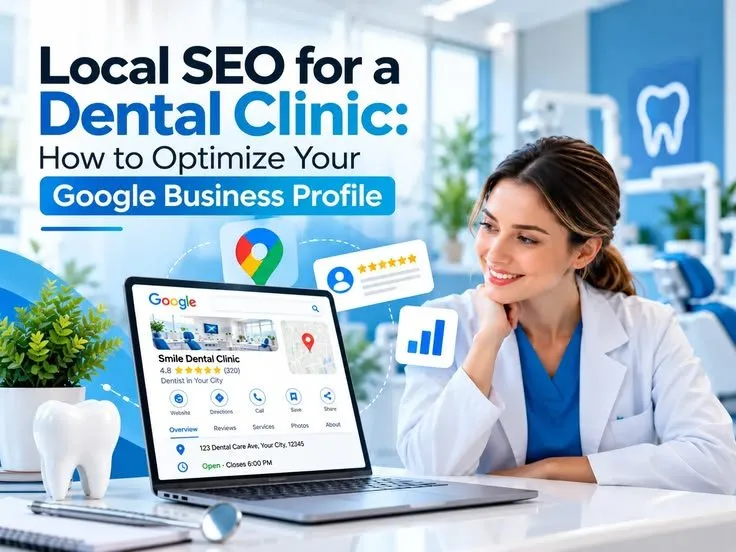
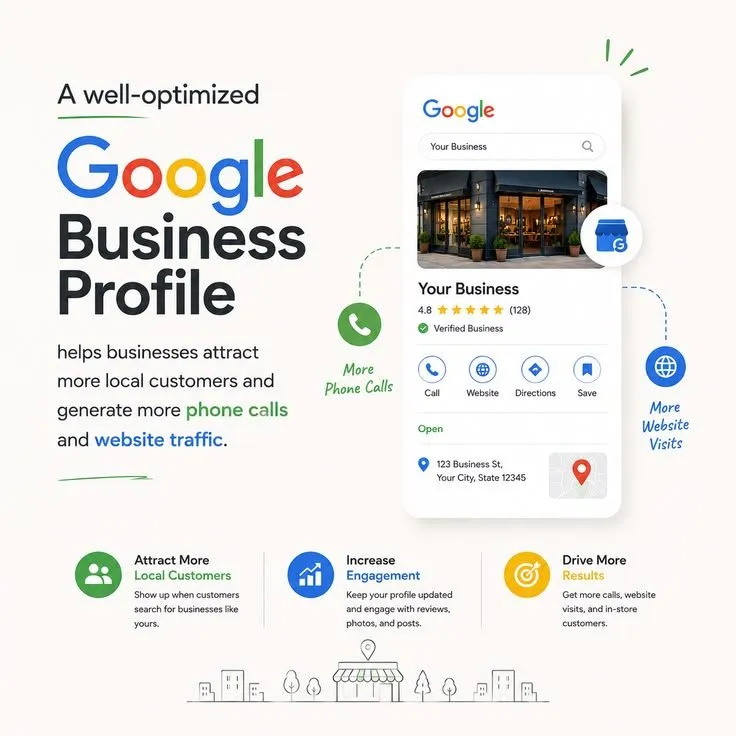
Most patients choose a clinic near home or work, so they search “dental clinic near me” and look at the first few results on Google Maps. Your Google Business Profile, a free listing that shows your clinic on the map, is often the first thing they see. That makes it the most valuable marketing asset you own.
Set it up properly:
- Choose the most accurate category, such as Dentist or Dental clinic.
- Keep your name, address and phone number identical on Google, your website, Facebook and Instagram.
- Describe your location with landmarks. “Opposite the filling station on the main road” often helps more than a street number.
- List services, opening hours and emergency arrangements.
- Add photos of reception, equipment and the entrance, never of patients.
- Add your WhatsApp number and a booking link.
Check the listing's insights each month for calls, direction requests and website clicks. If calls are high but bookings are low, the problem is how phones are answered, not visibility. If you want help with local search, our SEO services can take this off your team.
Service Pages Patients Understand
Many clinic websites list “scaling, extraction, braces, implants” and stop. A worried patient wants to know what will happen to them. Give each main service its own page with:
- Who it is for, such as bleeding gums or a child's first visit
- What happens at the visit, in plain language
- How long it usually takes
- What to bring, such as old X-rays, current medication and an HMO card
- General aftercare guidance
- How the cost is confirmed, and how to book
An illustrative example for a scaling and polishing page: “Most visits take about 45 minutes. Prices start from ₦25,000 (example only). Your dentist confirms the final cost after examining you.” Have your dentist check every clinical detail, and confirm what your professional rules allow you to publish about prices. Even a line like “we confirm your cost after examination” removes much of the fear.
Health Education Content That Builds Trust
Patients search for answers before they search for clinics, so useful content puts you in front of them early and brings search traffic to your website. Start with questions your front desk hears every week:
- “Is tooth extraction painful?”
- “How often should I scale my teeth?”
- “What can I do about a toothache before I reach the clinic?”
Answer one question per post or short video. Using Pidgin, Hausa, Igbo or Yoruba can reach people that formal English misses. Keep it general, never a diagnosis, and end with a clear line: “Only a dentist can assess your situation. Book an examination.” One answer can become a blog post, an Instagram caption, a WhatsApp status and a short video.
Appointments, Calls and WhatsApp Without Breaking Privacy
Speed wins bookings. Use WhatsApp Business with a greeting message, an away message for after hours, quick replies for common questions, and labels such as new enquiry, booked and follow-up.
Privacy needs equal attention. Nigerian data protection law treats health data as sensitive personal data, which carries stricter conditions such as explicit consent, and some health providers may need to register with the Nigeria Data Protection Commission. Ask your adviser what applies to your practice. In the meantime:
- Collect only what you need to book: name, phone number, service and preferred time.
- Do not ask patients to send symptoms or photos in open chats. Move clinical conversations to a consultation.
- Never add patients to a shared WhatsApp group, and use a clinic phone, not staff personal phones.
- Tell patients in one short line how you will use their details, and ask permission to send reminders.
Reminders and recall are where clinics quietly lose money. A reminder the day before reduces missed appointments, and a message when a check-up is due brings patients back. A simple patient database with automated reminders and email follow-up handles this, and our CRM & Email Marketing service is built for it. Track reply time, enquiries that become bookings, and booked patients who actually turn up.
An AI Chat Agent on WhatsApp and Your Website
An AI chat agent can answer the first message at 11 pm, when your team is asleep, and capture bookings you would otherwise lose. Used badly it creates risk, so give it a narrow job.
It should book, reschedule and cancel appointments, send reminders, and answer questions on prices (if you publish them), opening hours, location and what to bring. It must never give medical advice, suggest medication, interpret symptoms or X-rays, or promise outcomes. Anything clinical goes to a person: pain with swelling, bleeding, injury, a child's symptoms, and any complaint.
An illustrative exchange:
Patient: How much is scaling and polishing?
Agent: It starts from ₦25,000 (example price). The dentist confirms the final cost after examining you. Would you like to book? I have Tuesday 10:00 or Thursday 2:00.
Patient: My gum is swollen and painful since yesterday.
Agent: I'm sorry you're in pain. I can't assess symptoms, so I'm passing this to our team now. If the swelling is spreading or you have trouble breathing or swallowing, please go to the nearest emergency unit immediately.
Mind the platform rules too. From 15 January 2026, Meta's WhatsApp Business terms prohibit AI providers from offering general-purpose assistants as their main product, but businesses using AI for customer service, such as bookings and support, are not affected. A narrow booking and information agent fits that use, but check the current terms with your provider.
Build it safely:
- Say clearly that it is an automated assistant, and offer “talk to a person” at every step.
- Load only facts the clinic has approved, and have it hand over when unsure.
- Review conversation logs weekly, and confirm where patient data is stored and who can see it.
- Make sure a staff member actually replies during working hours.
Reviews and Complaints: Replying the Right Way in Public
Reviews are part of how patients choose, so ask for them. After a visit, send a short thank-you with your Google review link. Never pay or reward people for reviews, which breaks Google's rules and damages trust, and check whether your professional rules limit using patient testimonials in your own promotion.
When you reply publicly, protect privacy. Do not confirm the reviewer was a patient and do not mention any treatment. Thank them, then move the conversation to a private channel. For a positive review:
“Thank you for taking the time to share this. We're glad your visit went well and we look forward to seeing you again.”
For a complaint:
“Thank you for telling us. We're sorry your experience did not meet your expectations and we would like to understand what happened. Please call our patient care line on [number] or message us on WhatsApp and ask for the clinic manager.”
Do not argue or discuss clinical details in public. Investigate internally, then follow up privately, and report suspected fake reviews to Google instead of fighting them in the comments.
Frequently asked questions
Can a dental clinic advertise in Nigeria?
Yes, but within the MDCN Code of Medical Ethics and its social media guidance. Keep content educational, avoid boasting and comparisons, and have the lead dentist approve it. This is not legal advice.
Is a Google Business Profile really free?
Yes. Creating and managing a listing costs nothing.
Can we post patient photos or before-and-after pictures?
Not without written consent, and you should first check whether your professional rules allow it. Clinic photos are the safer choice.
Can an AI chat agent give medical advice?
No. It should only handle bookings, reminders and approved information, and hand clinical questions to a person.
Is it safe to send appointment reminders on WhatsApp?
Yes, with the patient's permission. Keep reminders limited to date, time and clinic name, and leave out treatment details.
How should we reply to a negative review?
Thank the person, apologise for their experience, do not confirm they were a patient, and invite them to continue privately with a named manager.