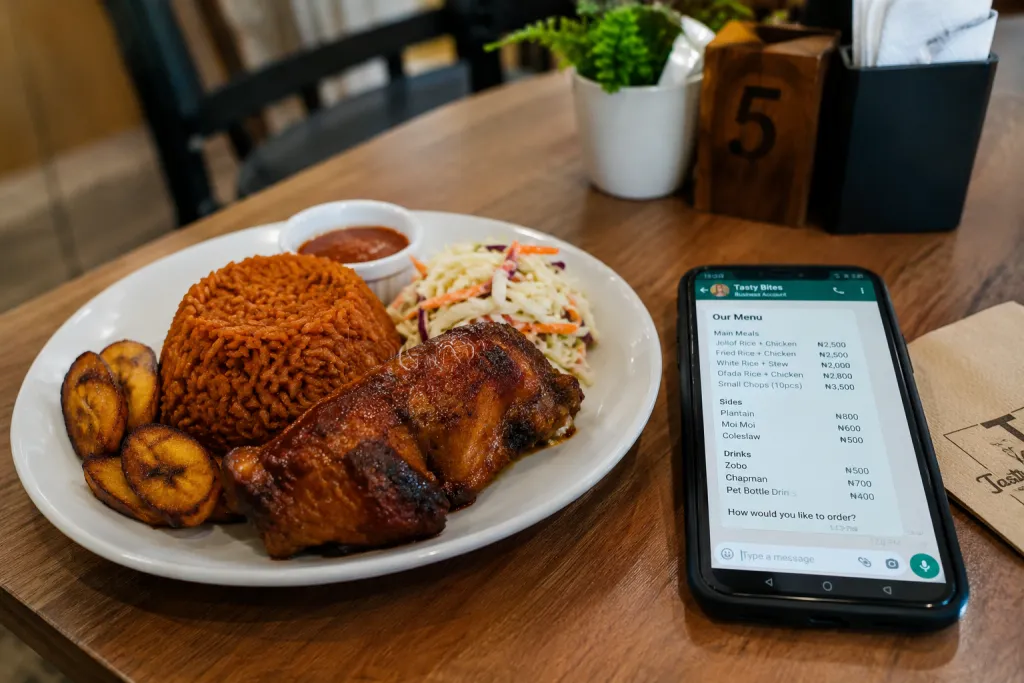


Here is a marketing strategy for a restaurant in Nigeria that starts with the basics and does not need a huge budget.
Running a restaurant in Nigeria is more than preparing good food and hoping customers will come. You can have delicious meals, a beautiful space, and friendly staff, yet still struggle to attract customers consistently. This is where a good restaurant marketing strategy becomes important.
Whether you run a restaurant, lounge, or home kitchen, the right marketing approach can help more people discover your business, trust your brand, and keep coming back.
The good news is that you do not necessarily need a huge budget to get started. Sometimes, what your business needs is better visibility, clearer communication, and a strategy that turns attention into actual orders.
Let's look at how you can make this happen.
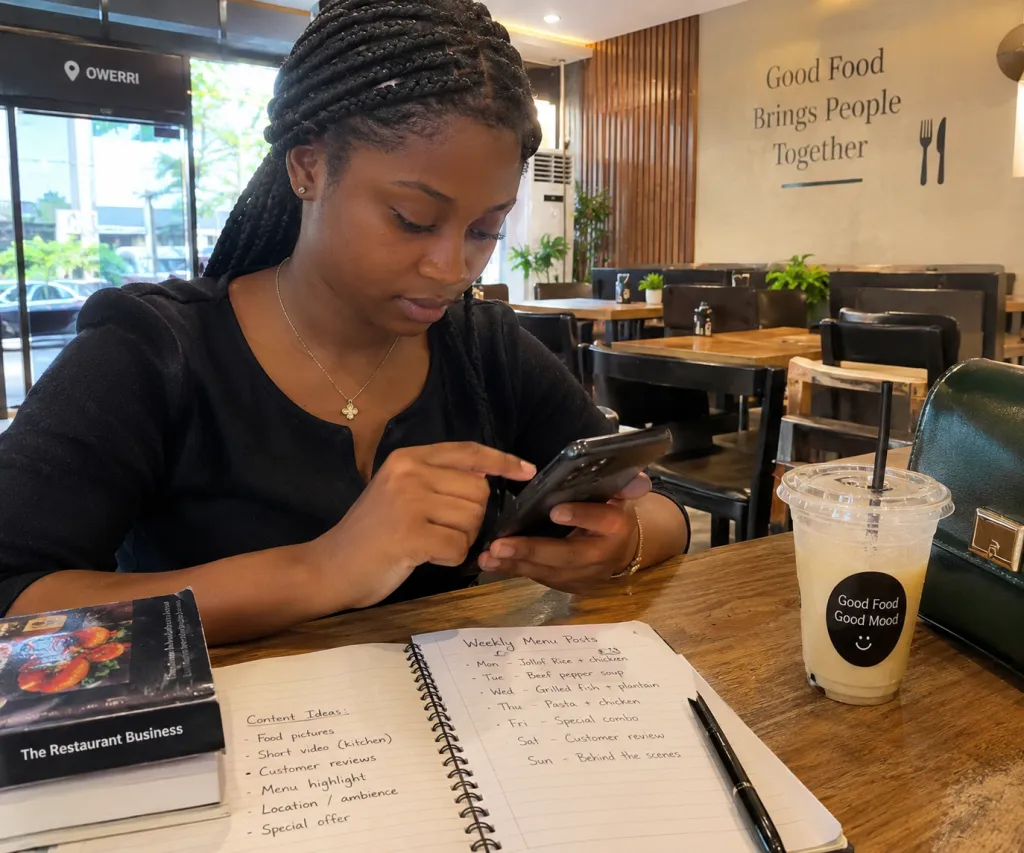
1. First important Marketing Strategy for a Restaurant: Google Business Profile, Photos and Reviews - How People Choose Where to Eat Tonight
Imagine someone in Owerri searching for a place to eat. They might type "restaurants near me" into Google or search for a good place to have dinner.
Will your restaurant appear?
If it does, what will they see?
These are important questions because customers often make decisions before they ever step into your restaurant. They look at your location, pictures, reviews, opening hours, and sometimes even the menu before deciding whether your business is worth visiting.
This is why setting up and maintaining your Google Business Profile should be part of your restaurant marketing strategy in Nigeria.
Start by ensuring that your business name, address, phone number, and opening hours are correct. Add clear pictures of your meals, restaurant interior, and other things customers might want to see before visiting.
Please, do not underestimate the power of pictures. A customer who has never tasted your food cannot judge its taste yet, but they can see how well it is presented.
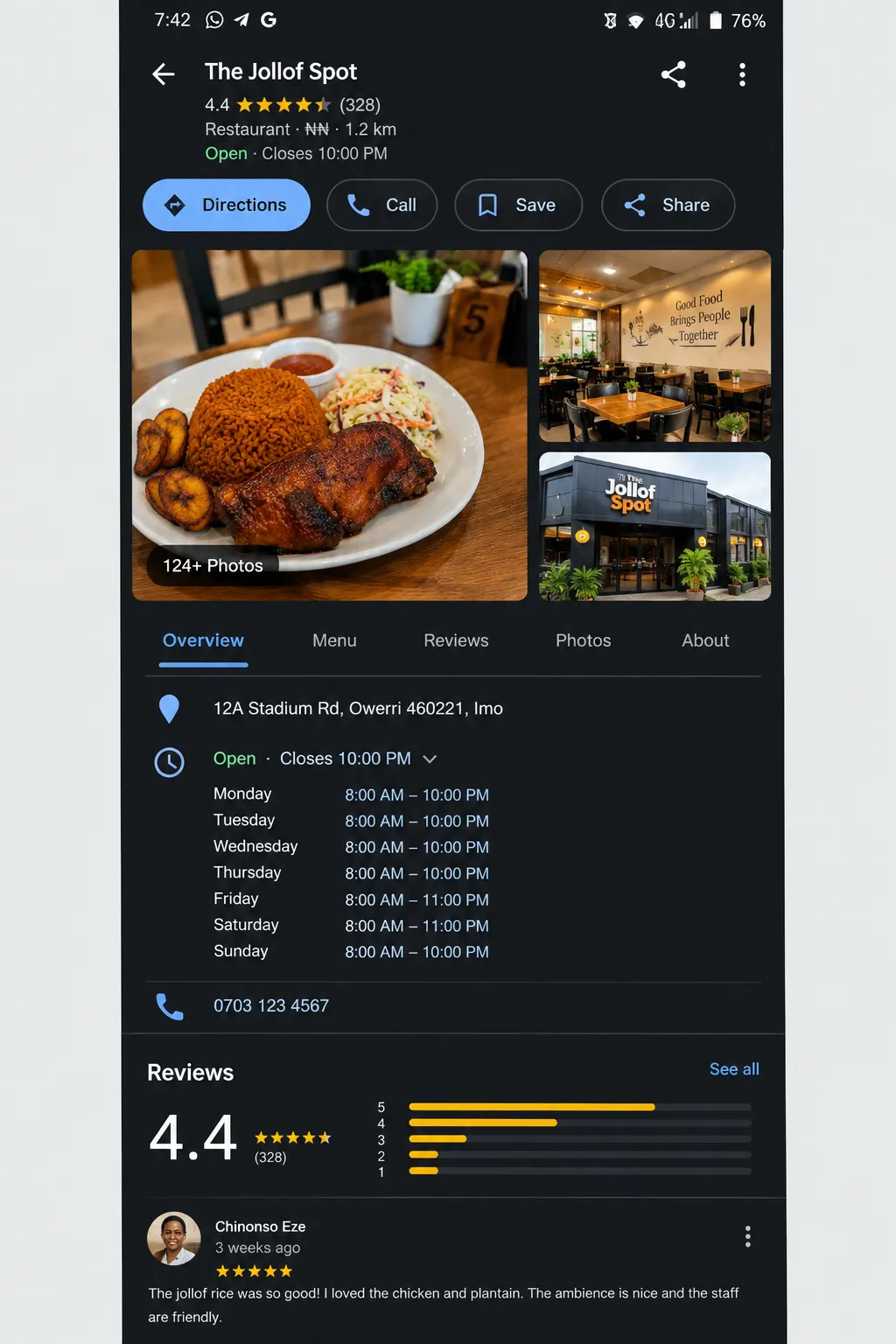
Reviews matter too.
Encourage satisfied customers to leave honest reviews about their experience. You can do this by politely asking them after a meal or including a small reminder on your receipts.
And when someone leaves a review, respond to it. Thank customers for positive feedback, and address complaints professionally.
You will not always get perfect reviews, and that is fine. What matters is how you respond and whether customers can see that you take their experience seriously.
The goal is simple: when someone discovers your restaurant online, give them enough reasons to choose you.
Delivery Platforms Against Your Own Ordering Page: The Maths on Commission
Food delivery platforms can help your restaurant reach customers who may never have visited your physical location.
Someone can discover your food, place an order, and receive it without leaving home. That is convenient for the customer and potentially profitable for your business.
However, there is something restaurant owners need to consider: the cost of convenience.
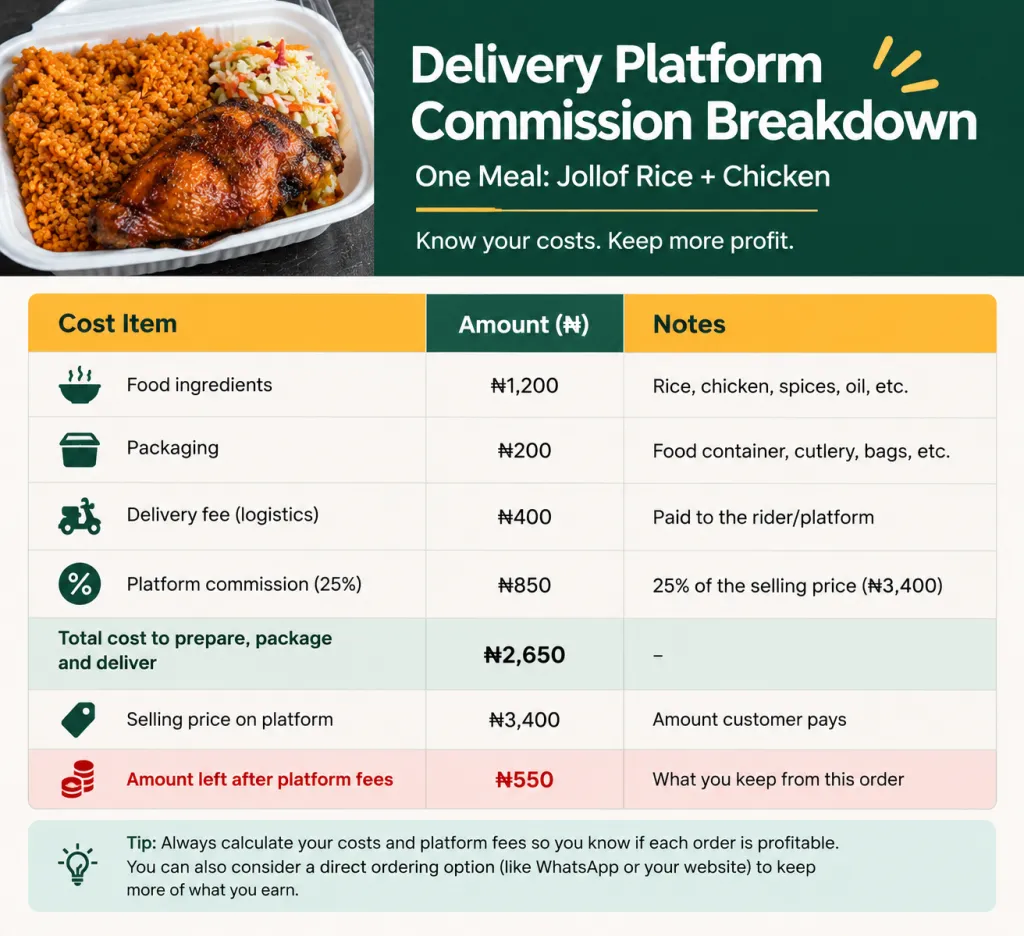
Delivery platforms may charge commissions or other fees, depending on the platform and your agreement. When you add food costs, packaging, staff expenses, and delivery charges, the amount left from each order may be smaller than expected.
This does not mean you should avoid delivery platforms. Rather, you should understand the numbers before relying on them.
For every meal you sell, calculate how much it costs to prepare, package, and deliver it. Then compare that with the amount you actually receive after applicable fees.
This helps you determine whether the order is profitable.
You can also develop a direct ordering system using WhatsApp Business or a simple ordering page on your website.
For example, you could use delivery platforms to introduce your restaurant to new customers while making it easy for existing customers to order directly from you.
Your direct ordering process should be straightforward. Customers should know what is available, how much it costs, how to place an order, and when to expect delivery.
Do not make people go through unnecessary steps just to buy food.
The aim is not simply to receive more orders. It is to receive orders that make business sense.
Menu Photography and Prices That Travel Well on Instagram and WhatsApp Status
Let's be honest: people eat with their eyes before they taste the food.
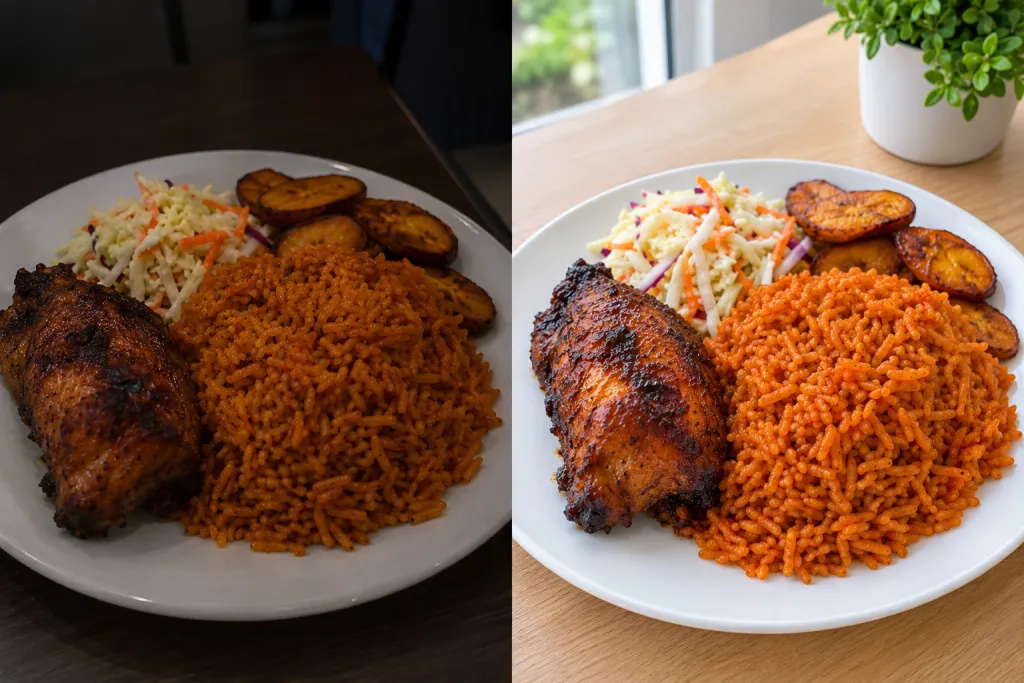
When someone sees a well-presented plate of jollof rice, a delicious-looking bowl of soup, or a beautifully packaged meal on Instagram, they may become interested even before checking the price.
This is why your food pictures deserve attention.
You do not need an expensive camera or a professional photography studio to get started. A smartphone, good lighting, a clean background, and careful presentation can make a difference.
Here are a few things to consider:
- Take pictures in natural light where possible.
- Keep the background clean and free from unnecessary distractions.
- Show the actual meals you sell.
- Avoid excessive editing that makes your food look different from what customers will receive.
- Use clear pictures that allow customers to see the portion and presentation.
Your menu should be just as easy to understand.
Include the names of your meals, prices, available portions, and any important information customers need before ordering.
Imagine a customer seeing your food on WhatsApp Status but having to send three messages just to find out the price. Some customers will ask, but others may simply move on.
Make it easy for people to make decisions.
WhatsApp Status can be especially useful for reaching people who already know you, including previous customers, friends, colleagues, and people who have saved your number.
Instead of posting only when you need sales, create a consistent routine. Share your menu, highlight a popular meal, announce special offers, and remind people how to place orders.
Your social media pages should not just show that your restaurant exists. They should give people reasons to buy from you.
Working with Food Creators and Small Influencers Without Wasting Money
Influencer marketing can help your restaurant reach people who might not have discovered you otherwise.
However, choosing an influencer simply because they have thousands of followers is not always the best decision.
What matters is whether their audience is relevant to your business.
For example, if your restaurant serves customers in Owerri, a food creator whose audience is mainly based in another state may not bring you the results you want.
Before paying for a collaboration, consider the following.
- Location: Does the creator reach people who can realistically visit your restaurant or order from you?
- Engagement: Do people comment, ask questions, and interact with their content?
- Content quality: Can they present your food in a way that makes people interested?
- Audience relevance: Do their followers match the kind of customers you want to attract?
You can also work with smaller food creators who have an engaged local audience. Depending on your goals and the creator's rates, this may be a better fit than a large campaign.
Be clear about what you expect from the collaboration. Is the creator supposed to make a review, produce a video, announce an offer, or direct people to your ordering page?
You should also agree on the deliverables and cost before the collaboration begins.
Most importantly, track the results.
You could use a campaign-specific discount code or ask new customers how they heard about your restaurant.
This helps you understand whether the collaboration is bringing attention, actual orders, or both.
Remember, the goal of influencer marketing is not just to be seen. It is to reach the right people and give them a reason to buy.
Filling Quiet Hours: Weekday Offers, Office Lunch Packs and Events
Every restaurant has periods when customers come in more frequently and periods when business becomes quiet.
Perhaps weekends are busy, but Tuesday afternoons are slow. Maybe dinner orders are common, while lunchtime sales remain low.
Instead of accepting these quiet periods as unavoidable, consider how you can make them more attractive to customers.
One option is to create offers specifically for slower periods.
For example, you could introduce weekday lunch packs for workers who need convenient meals during their lunch breaks. If your location is close to offices, schools, or business centres, this could be worth exploring.
You might also create meal packages for groups.
Instead of selling only individual portions, consider office lunch orders, small group packages, or pre-arranged meals for meetings.
Events can provide another opportunity. Depending on your space and business model, you could offer catering for birthdays, small celebrations, meetings, or other gatherings.
The important thing is to understand your customers and identify what they need.
Do not introduce discounts simply because sales are low. First, consider whether the offer will attract the right customers and still leave room for profit.
For instance, a weekday lunch package could include a meal and a drink at a price that makes sense for both your customers and your business.
You can promote these offers through WhatsApp Status, Instagram, your Google Business Profile, and direct communication with potential customers.
You do not have to launch five different promotions at once. Start with one idea, monitor the response, and improve it based on what you learn.
A quiet period can become an opportunity to reach a different group of customers.
An AI Chat Agent on WhatsApp and Your Website: Taking Orders and Answering Questions All Day
How many times have you had to answer questions such as "Are you open?", "How much is this meal?", "Do you deliver to my area?" or "Can I book a table?"
These questions are normal. Customers need information before making a purchase.
However, answering the same questions repeatedly can take up valuable time, especially when you are managing orders, supervising staff, and attending to customers in person.
This is where automation can help.
A simple automated chat system on WhatsApp or your website can provide answers to frequently asked questions, share your menu, explain your opening hours, and guide customers through the ordering process.
Depending on the tools you use, it may also help with reservations and order enquiries.
For example, someone could message your business to ask about your menu. The system could provide the available options and explain how to place an order.
If the customer has a question the system cannot answer, the conversation can be passed to a staff member.
You do not need to build an advanced system from the beginning. Start by identifying the questions customers ask most often and finding a tool that can help you answer them efficiently.
Also, ensure that the information provided is accurate and up to date. An automated system that shares an old menu or gives the wrong opening hours can create more problems than it solves.
Automation should make your business easier to access, not make customers feel ignored.
The best approach is to combine technology with human support so customers can get quick answers when possible and speak to someone when necessary.
Keeping Regulars: Loyalty, Birthdays and a Simple Customer List
Getting a new customer is good. Giving that customer a reason to return is even better.
Think about it. Someone visits your restaurant, enjoys the food, and has a pleasant experience. If you do nothing to maintain that relationship, they may remember you the next time they happen to see your business online.
But what if you give them a reason to return sooner?
This is where customer retention comes in.
You can introduce a simple loyalty programme that rewards customers for repeated purchases. For example, customers might receive a reward after a certain number of eligible purchases, provided the offer is financially sustainable for your business.
You could also create special offers for birthdays, introduce occasional customer appreciation promotions, or inform regular customers when their favourite meals are available.
A simple customer list can help you organise these efforts.
You might record customers' names, contact details where they have agreed to provide them, order preferences, and relevant dates. Keep this information secure, collect only what you need, and respect customers' privacy and communication preferences.
WhatsApp Business can help you organise customer conversations and share updates with people who want to hear from your business.
However, avoid sending messages so frequently that customers begin to see your business as a disturbance.
Make your communication useful.
You could share a new menu, announce a special offer, or remind customers about an upcoming event.
And never forget the basics: good food, fair pricing, friendly service, and consistency.
No loyalty programme can permanently compensate for a poor customer experience.
Your marketing may bring people through the door, but the experience you provide gives them a reason to return.
Frequently asked questions
How can I market my restaurant in Nigeria with a small budget?
Start with the basics. Set up your Google Business Profile, take clear pictures of your meals, create a WhatsApp Business account, and make your menu easy to access.
Encourage satisfied customers to leave honest reviews and post consistently on the social media platforms your customers use.
You can also explore partnerships with nearby businesses and test small promotional offers.
The key is to start with activities you can manage consistently, then invest more in the strategies that produce results.
Which social media platform is best for marketing a restaurant?
There is no single platform that works best for every restaurant.
Instagram can help you showcase food through pictures and videos. WhatsApp is useful for sharing menus, communicating with customers, and receiving enquiries. TikTok may help you reach new audiences through engaging short videos.
Your choice should depend on where your target customers spend time and how they prefer to discover and order food.
You do not have to be everywhere at once. Start with one or two platforms and use them well.
How do I attract more customers to my restaurant?
First, make it easy for people to discover you. Maintain an accurate online business profile, publish clear menu pictures and prices, and provide a straightforward ordering process.
You can also test weekday offers, work with relevant local food creators, encourage customer reviews, and build relationships with existing customers.
Monitor the results so you can identify which activities are bringing actual customers rather than attention alone.
Is digital marketing worth it for a small restaurant?
Yes, digital marketing can be useful for small restaurants because it provides several ways to reach potential customers, communicate offers, and build relationships.
However, results depend on your location, audience, offer, budget, and consistency.
Start with affordable activities that address your immediate needs. As you learn what works, you can decide whether paid advertising, influencer partnerships, or more advanced tools are worth the investment.
How can I measure whether my restaurant marketing is working?
Track a few simple indicators, including the number of orders received, enquiries that turn into purchases, repeat customers, average order value, and the cost of running each campaign.
You can also ask new customers how they heard about your business.
Do not rely on likes and views alone. They can indicate interest, but they do not always translate into sales.
The goal is to understand which marketing activities help your business attract customers and generate sustainable revenue.
What is a good marketing strategy for a reataurant in Nigeria?
A good restaurant marketing strategy in Nigeria starts with being easy to find online. Keep your Google Business Profile accurate, show your meals clearly with prices, and make ordering simple. Once that works, add offe