
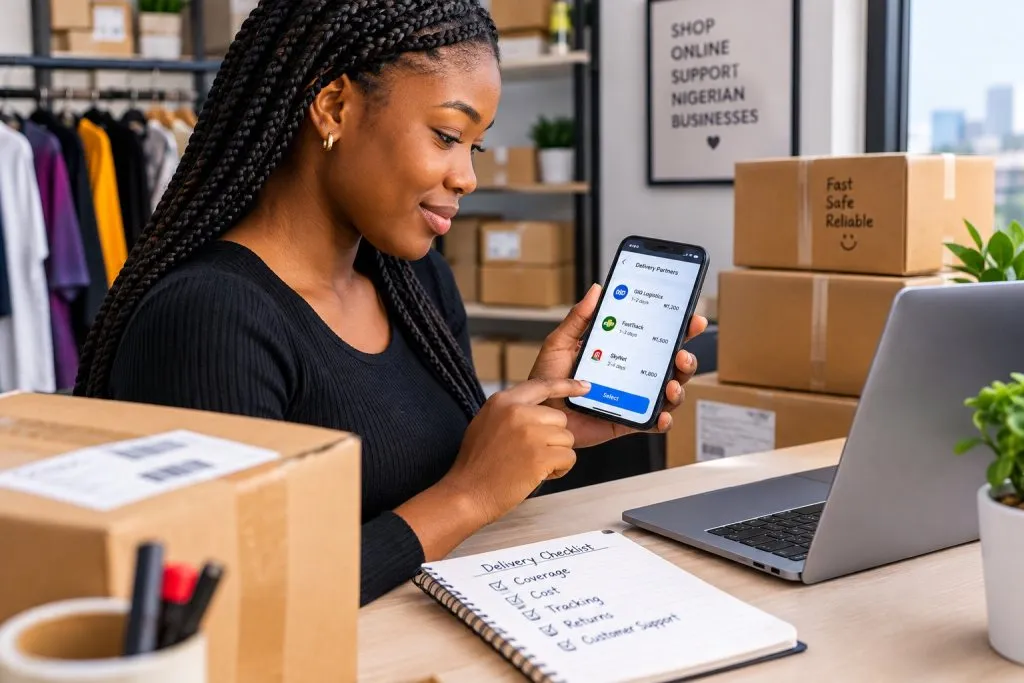


Choosing a delivery partner starts with understanding what your Nigerian online store actually needs.
Starting an online store in Nigeria is more than finding good products, creating attractive social-media content, and getting customers to place orders. The moment a customer clicks “Buy”, another part of the business takes over: getting that order safely and efficiently from your hands to the customer's doorstep.
That is where your logistics partner comes in.
A poor delivery experience can turn a satisfied customer into a frustrated one. Delays, damaged parcels, unexpected charges, poor communication, failed deliveries, and difficult returns can affect your reputation even when the product itself is excellent.
The right delivery partner, therefore, should not simply be the company offering the cheapest delivery fee. You need a partner whose coverage, pricing, speed, reliability, technology, customer service, payment handling, and returns process fit the needs of your store.
1. Understand Your Store's Delivery Needs First
Before comparing delivery companies, understand what your business actually requires.
Ask yourself:
- Where are most of my customers located?
- Do I deliver only within my city or across Nigeria?
- How many orders do I normally send per week?
- What types of products do I sell?
- Are the products fragile, bulky, expensive or even perishable?
- Do customers pay before delivery or on delivery?
- How quickly do customers expect their orders?
- Will customers need to return or exchange products?
These questions help you avoid choosing a delivery service based purely on reputation or price.
For example, a fashion seller sending lightweight clothing around Benin may have very different requirements from a business shipping electronics, cosmetics, furniture, food, or fragile items nationwide.
2. Check the Delivery Company's Coverage
Coverage is one of the first things you should investigate.
A delivery company may be excellent in Lagos but have limited reach in other states. Another may have nationwide operations but take longer to reach certain locations.
Find out whether the provider delivers to:
- Your main customer locations
- Major cities
- Smaller towns
- Remote areas
- The Federal Capital Territory
- All the states you intend to serve
- Specific difficult-to-reach areas where your customers live
Do not assume that “nationwide delivery” means every location receives the same service level.
Ask the provider for its actual coverage list and determine whether some locations attract additional fees or longer delivery times.
3. Compare the Total Delivery Cost
Price matters, especially for small businesses operating with tight margins.
However, the cheapest advertised delivery fee is not necessarily the cheapest option in practice.
When comparing providers, ask about:
- Base delivery fee
- Pickup charges
- Additional-distance charges
- Remote-area charges
- Waiting charges
- Failed-delivery charges
- Return-to-sender fees
- Packaging fees
- Cash-handling charges
- Insurance or declared-value charges
- Extra charges for bulky or fragile items
- Taxes or other applicable fees
For example, a courier may advertise an attractive starting price but add charges depending on distance, parcel size, waiting time, or unsuccessful delivery.
Always request the complete pricing structure before committing.
Calculate delivery cost against your profit margin
Suppose:
- Product selling price = ₦25,000
- Product cost = ₦15,000
- Gross margin before other expenses = ₦10,000
If delivery and related fulfilment costs consume a large portion of that margin, you need to reconsider your pricing, delivery model, or provider.
You can also offer customers different delivery options, such as standard and express delivery, where appropriate.
4. Evaluate Delivery Speed
Customers generally want their orders as soon as reasonably possible.
But speed should be evaluated according to your product and customer expectations.
Ask:
- What is the average delivery time within the same city?
- How long does interstate delivery usually take?
- Are weekend deliveries available?
- Are public holidays excluded?
- Is express delivery available?
- What happens when there is a delay?
- Does the company provide an estimated delivery date?
Do not promise customers “same-day delivery” simply because a courier advertises a same-day option. Confirm whether that service actually applies to the locations where your customers live and under what conditions.
For Nigerian e-commerce businesses, last-mile delivery can be particularly challenging because traffic, road conditions, location complexity, and other operational factors can affect the final leg of delivery.
5. Look for Reliable Tracking
Tracking gives both you and your customer visibility over an order.
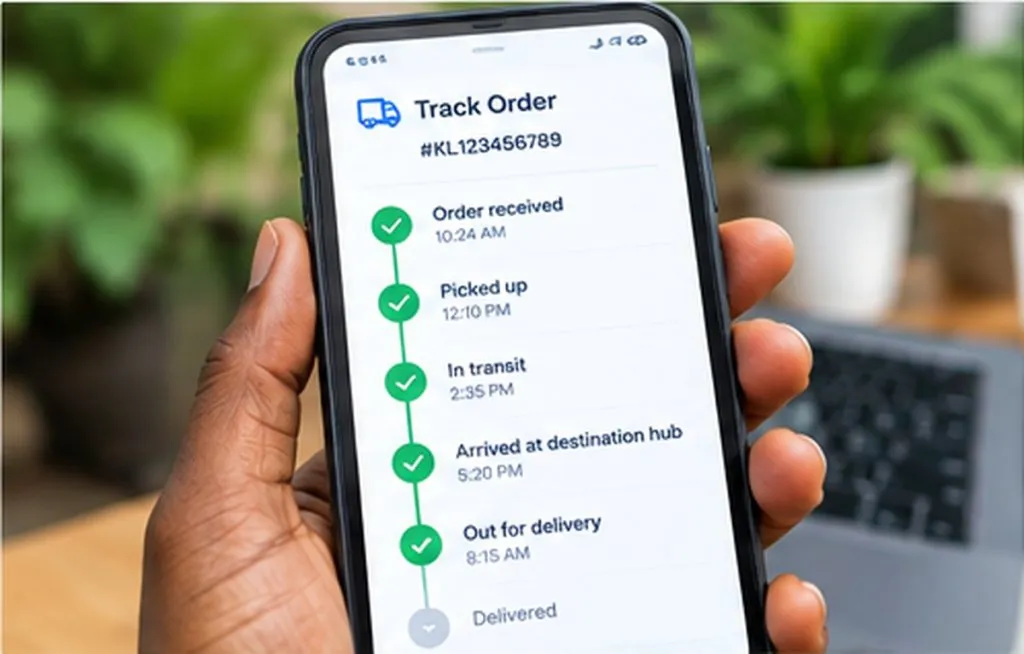
A good tracking system should ideally allow you to see stages such as:
Order received → Picked up → In transit → Arrived at destination hub → Out for delivery → Delivered
Good tracking reduces the need for customers to repeatedly message you asking:
“Where is my order?”
Look for providers that offer:
- Tracking numbers
- Online tracking
- SMS or email notifications
- Delivery-status updates
- Proof of delivery
- Delivery timestamps
- Recipient confirmation
- Clear explanations when a delivery is delayed
Tracking is particularly useful when you are managing several orders at once.
6. Investigate Cash-on-Delivery Carefully
Cash-on-delivery (COD) can be useful for online stores because some customers prefer paying when they receive their products.
However, COD creates additional operational considerations.
If you use COD, ask:
- Does the courier offer COD?
- How is the customer's payment collected?
- How is the money transferred to you?
- How frequently are remittances made?
- Are there transaction or collection charges?
- What happens if the customer refuses the parcel?
- What happens if the customer opens the package and refuses it?
- How are disputes handled?
- Is there a transaction limit?
- Is there a clear record of every COD payment?
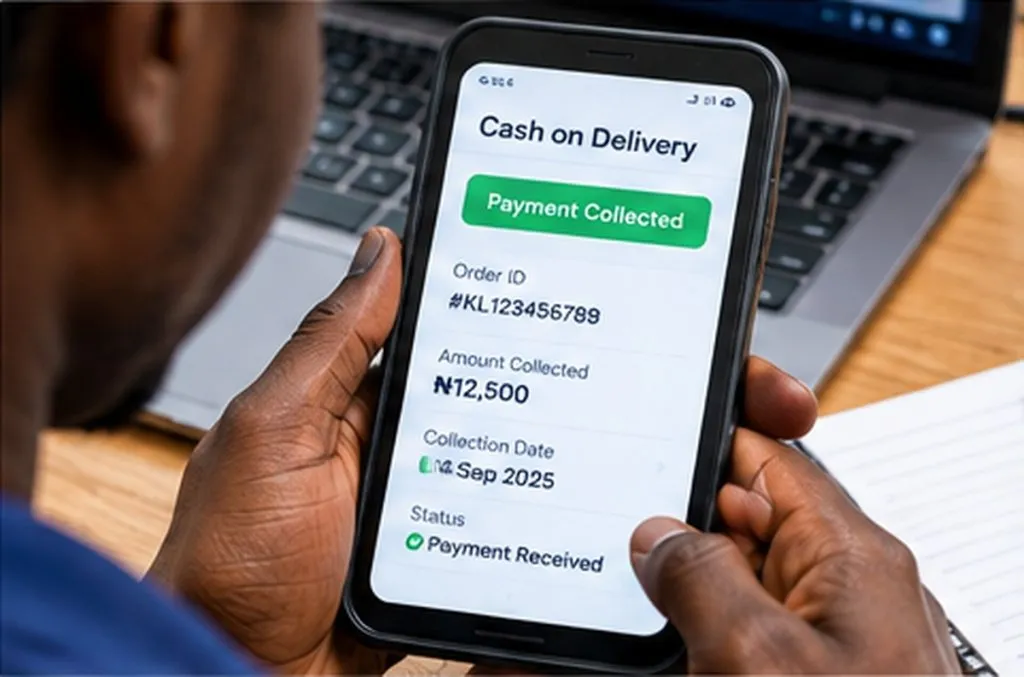
Make sure the provider has a transparent reconciliation process.
Your records should allow you to match:
Order number → Customer → Amount collected → Delivery status → Amount remitted
Never rely solely on informal WhatsApp messages or verbal agreements for financial reconciliation.
7. Examine the Returns and Reverse-Logistics Process
Returns are part of e-commerce.
Customers may receive the wrong size, wrong colour, damaged product, incorrect item, or simply request a return under your store's policy.
Before selecting a delivery partner, ask:
- Can the courier collect returned products?
- How much does a return cost?
- How quickly are returned parcels sent back?
- Can the courier handle exchanges?
- Can you track returned items?
- What happens when a customer refuses delivery?
- Where are failed deliveries held?
- How long are parcels held before being returned?
A provider with a well-defined reverse-logistics process can save you considerable time and money.
8. Check How Parcels Are Handled
A delivery partner represents your brand during the physical movement of your products.
Find out how parcels are handled from pickup to delivery.
For fragile or valuable products, ask about:
- Packaging requirements
- Fragile-item handling
- Secure storage
- Warehouse procedures
- Vehicle or rider handling
- Proof of delivery
- Damage claims
- Loss claims
- Insurance
- Maximum compensation for damaged or lost parcels
You should also understand what happens if a parcel disappears or arrives damaged.
Do not wait until your first major loss to discover that the courier's liability policy does not cover your type of product.
9. Verify the Company's Reliability
A delivery partner can have excellent prices and impressive advertising but still be difficult to work with operationally.
Look beyond marketing claims.
Investigate:
- Delivery success rate
- Frequency of delays
- Lost-parcel complaints
- Customer reviews
- Business reviews
- Response time
- Complaint resolution
- Accuracy of tracking information
- Consistency during busy periods
- Performance during sales campaigns
Ask other online sellers about their actual experiences.
One particularly useful question is:
“What happens when something goes wrong?”
Anyone can provide a smooth delivery when everything works perfectly. The quality of a logistics partner becomes clearer when a parcel is delayed, damaged, lost, refused, or sent to the wrong location.
10. Test the Customer-Service Team
Customer service becomes important when something goes wrong.
Before signing a long-term agreement, contact the company with a few practical questions.
Observe:
- How quickly do they respond?
- Do they actually answer the question?
- Do they understand their own service?
- Can you reach a human being when necessary?
- Are complaints assigned reference numbers?
- How quickly are problems resolved?
- Is there a dedicated business-support channel?
If the provider is difficult to reach before you become a customer, consider how difficult it might be when you have dozens of parcels in transit.
11. Check Pickup Convenience
For an online seller, pickup can be just as important as delivery.
A courier may require you to take every parcel to a depot, while another may collect orders directly from your shop, home, warehouse, or fulfilment location.
Ask:
- Is pickup available?
- Is pickup free?
- What is the pickup schedule?
- What is the minimum number of parcels?
- Can pickups be requested through an app?
- Can you schedule recurring pickups?
- What happens if the rider arrives late?
- Can multiple orders be collected at once?
If you ship many orders every day, reliable pickup can save significant time.
12. Consider Technology and Order Management
Technology becomes increasingly important as your store grows.
A good logistics platform may offer:
- Online shipment creation
- Bulk order processing
- Tracking dashboards
- Automated notifications
- Digital proof of delivery
- Delivery reports
- COD reconciliation
- API or store integration
- Customer address management
- Delivery analytics
You may not need every feature when starting out.
But if you plan to grow from five orders a week to hundreds of orders a month, choose a provider whose technology can support that growth.
13. Think About Address and Location Challenges
Nigerian addresses can sometimes be difficult for riders to locate.
Customers may provide:
- Incomplete addresses
- Incorrect house numbers
- Nearby landmarks instead of formal addresses
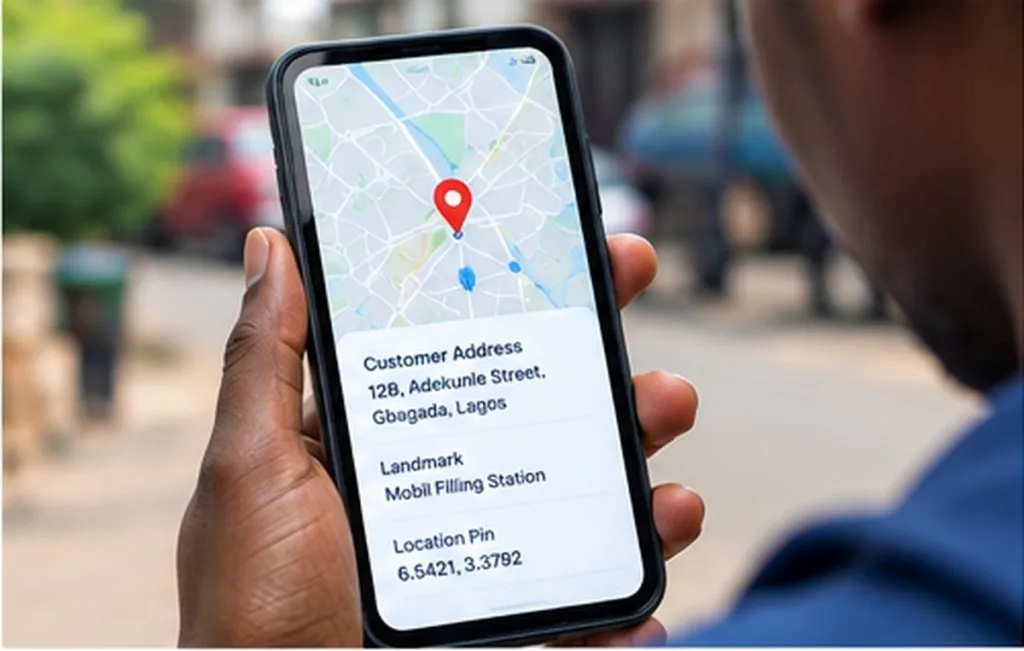
- Pin locations that do not match written addresses
- Business names instead of street addresses
Ask how your delivery provider handles difficult addresses.
A strong process may include:
- Customer phone verification
- GPS or map location
- Landmark information
- Rider-customer communication
- Delivery notes
- Rescheduling procedures
Make it a standard practice to collect a customer's:
Full name + phone number + detailed address + landmark + location pin where necessary.
This can significantly reduce failed deliveries.
14. Check Their Geographic Pricing Model
Nigeria is not one uniform delivery zone.
The price and difficulty of delivering a parcel can vary significantly depending on the origin, destination, distance, parcel size, and service type.
Ask for a delivery-rate card or pricing calculator that allows you to estimate costs before accepting orders.
15. Check Regulatory Compliance
If you are simply an online retailer using a third-party courier, the regulatory obligations can differ from those of a company operating its own courier/logistics service.
However, it is still sensible to verify that a delivery provider is properly authorised for the services it offers.
You can therefore ask a prospective logistics company for evidence of its relevant operating authorisation.
This is especially important when dealing with a company that will be handling valuable inventory or significant COD collections.
16. Ask About Insurance and Liability
Do not assume that a courier automatically covers the full value of your products if something goes wrong.
Ask:
- Are parcels insured?
- What types of loss are covered?
- What types of damage are excluded?
- Is there a maximum claim amount?
- What evidence is required to make a claim?
- How long does the claims process take?
- Are high-value goods treated differently?
For your own business, however, you should still understand exactly what protection applies to your particular products.
17. Start With a Trial Period
You do not have to commit immediately.
A small trial can reveal problems that a sales presentation will not.
For example, send test orders to:
- Customers within your city
- Customers in another major city
- A less-central location
- A difficult-to-find address
- A customer ordering a fragile product, if applicable
Record:
- Pickup time
- Delivery time
- Actual delivery cost
- Tracking accuracy
- Customer communication
- Parcel condition
- Rider professionalism
- COD performance
- Return handling
- Support response
After several test deliveries, you will have actual evidence instead of relying only on promises.
18. Don't Choose Based on Price Alone
Imagine two providers:
Provider A
- Lower delivery price
- Weak tracking
- Frequent delays
- Poor customer support
Provider B
- Slightly higher price
- Reliable tracking
- Better communication
- Stronger delivery consistency
- Easier returns
The cheaper price may look attractive initially, but repeated failed deliveries can create additional costs through refunds, replacement products, customer complaints, lost sales, and damaged reputation.
The real question is not “Who delivers the cheapest service?”, it is “Which provider gives my business the most dependable service for the total cost?”
19. Negotiate Once Your Order Volume Grows
If your business starts generating significant delivery volume, negotiate your delivery fees.
You may be able to discuss:
- Better rates
- Regular pickup
- Dedicated account support
- Faster settlement of COD funds
- Reduced return charges
- Bulk-shipping arrangements
- Packaging support
- Priority handling
- Custom reporting
Do not negotiate only on the delivery price, you can also negotiate the whole service package.
20. Have a Backup Delivery Option
Depending on your business model and location, having more than one delivery option can reduce operational risk.
For example:
| Provider | Role |
|---|---|
| Primary provider | Regular nationwide shipments |
| Secondary provider | Backup for urgent, difficult, or failed deliveries |
This can become particularly useful during:
- Sales campaigns
- Black Friday promotions
- Festive periods
- Public holidays
- Unexpected operational disruptions
- High-order-volume periods
You should know what you will do if your main courier suddenly becomes unavailable.
21. Set Clear Delivery Expectations With Customers
Even the best courier cannot solve a problem caused by unrealistic promises.
Tell customers:
- Processing time
- Expected delivery window
- Delivery fee
- Areas served
- Whether COD is available
- What happens if they miss the delivery.